
Muscle soreness recovery matters as much as training. Learn why muscle recovery after a workout takes time, what causes delayed onset muscle soreness, and how hydration, nutrition, and IV therapy for muscle recovery may fit into a consistent fitness routine and goals.
Training breaks you down. Recovery builds you back up.
Training hard is only half the equation. What happens after your workout plays a major role in how your body adapts, rebuilds, and performs the next time you train.
Whether your routine includes strength training, lifting weights, endurance training, or high-intensity group classes, muscle soreness is a common part of an active lifestyle.
The challenge? Recovery doesn’t always fit neatly into a busy schedule. Long workdays, travel, short sleep, and inconsistent nutrition can make muscle recovery after a workout feel slower than it should.
Understanding why soreness happens and how muscles recover can help you stay consistent with your fitness goals and avoid unnecessary setbacks.
Why Muscle Soreness Happens After Exercise
Muscle soreness often appears after intense exercise or unfamiliar movement patterns. This is commonly known as delayed-onset muscle soreness (DOMS), and it typically shows up 24 to 72 hours after a good workout.
During challenging workouts, muscles experience microscopic tears (sometimes called microtears or tiny tears) within their fibers. This process, known as exercise-induced muscle damage, is a normal response to training stress.
As the body repairs these damaged muscles, muscle fibers rebuild and adapt, contributing to muscle growth over time.
While soreness can feel uncomfortable, it doesn’t always indicate damage. However, persistent or severe pain may signal muscle injuries or the need for recovery days.
How Muscles Recover After a Workout
The muscle recovery process depends on several factors, including exercise level, workout intensity, sleep, hydration, and nutrition.
After post-workout stress, the body increases blood flow to affected muscle groups. This helps deliver oxygen and nutrients that assist with muscle repair and reduce inflammation.
Recovery isn’t instantaneous. Sore muscles may last a few days, depending on workout volume, body weight, and other factors like alcohol consumption or inadequate sleep. Proper recovery helps muscles recover efficiently and prepares the body for the next session.
Reducing Muscle Soreness Naturally
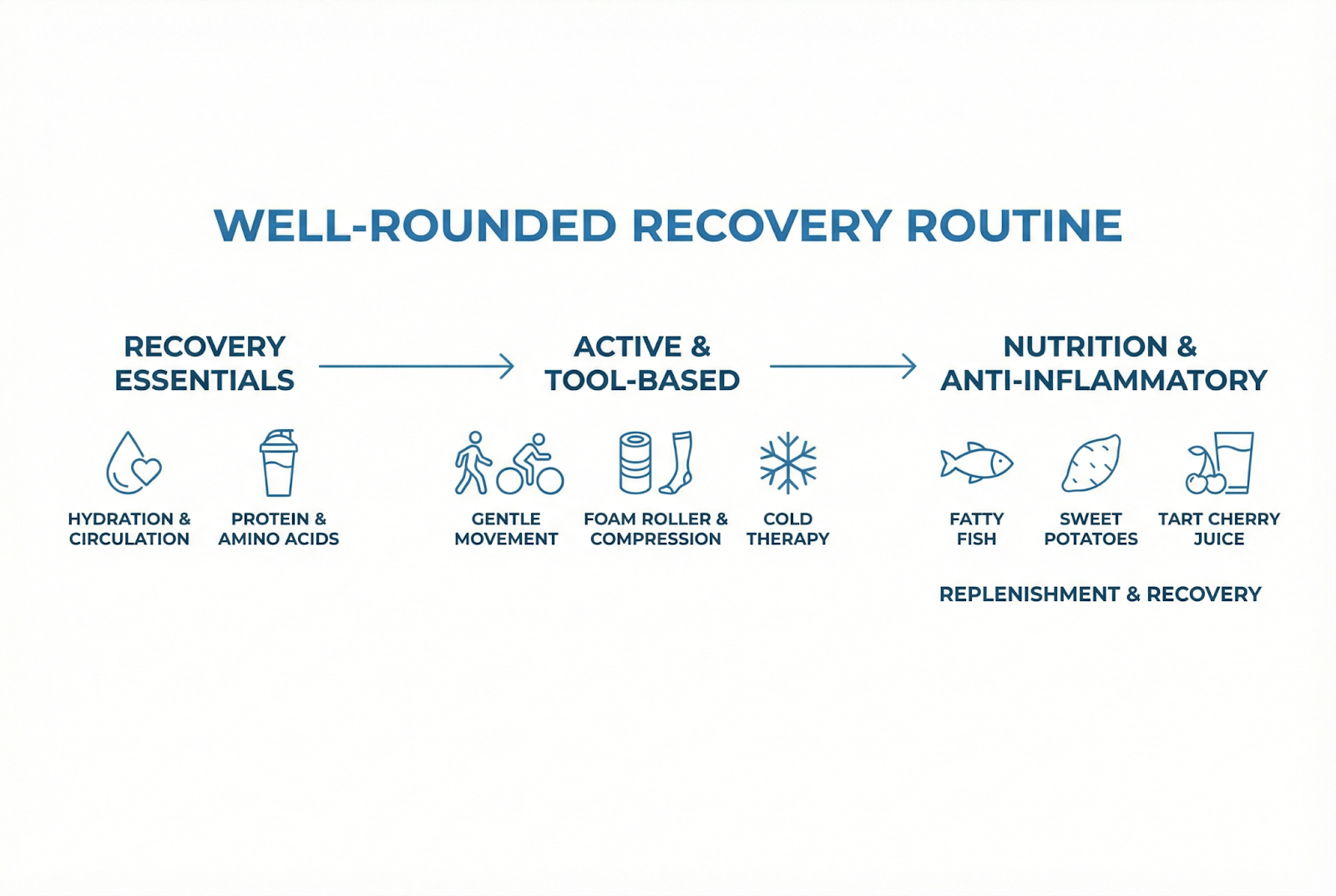
If you’re wondering what helps sore muscles after a workout, the answer is rarely one single solution. However, rebuilding glycogen stores after intense workouts helps restore energy levels for future training.
Muscle Soreness vs. Injury
Soreness is common, but it’s important to listen to your body. If you feel pain that worsens, limits movement, or persists beyond several days, it may be related to injury rather than typical post-workout soreness. In those cases, consulting a sports medicine doctor or a qualified medical professional is recommended.
Working out a sore muscle can be appropriate in some situations, especially if the soreness is mild, but alternating muscle groups and allowing recovery days can reduce the risk of muscle damage.
Where IV Therapy Fits Into Muscle Recovery After Workout
Some active adults explore IV therapy for muscle recovery as part of a broader wellness approach, especially during periods of intense exercise, travel, or stacked training sessions.
IV therapy delivers fluids and nutrients directly into the bloodstream in a controlled, supervised setting, removing variables related to digestion or timing.
Recovery-focused IV options often include nutrients such as amino acids, vitamin C, and B vitamins, which are involved in energy metabolism, immune system function, and cellular processes.
While IV therapy for fitness recovery is not a replacement for sleep, nutrition, or smart training, some people find it helpful when their routine makes it harder to maintain consistent recovery habits.
FAQs About Muscle Pain
How long does muscle soreness usually last after a workout?
Muscle soreness typically peaks 24–72 hours after exercise and may last a few days depending on workout intensity, recovery habits, and overall fitness level.
What helps sore muscles after a workout?
Staying hydrated, consuming protein, gentle movement, and allowing recovery days can help reduce muscle soreness and support the body’s natural recovery process.
Does IV therapy help with muscle recovery?
Some people use IV therapy for muscle recovery as part of a broader wellness routine to support hydration and nutrient availability, especially during intense training or travel-heavy weeks.
Is it okay to work out when muscles are still sore?
Light movement may be okay when soreness is mild, but rotating muscle groups and allowing time for recovery can help prevent strain and support long-term training consistency.
Key Takeaways
- Muscle soreness recovery is a normal part of training and is often associated with delayed-onset muscle soreness after intense or unfamiliar exercise.
- Muscle recovery after a workout depends on hydration, blood flow, nutrition, and allowing enough time for muscle repair between sessions.
- Sore muscles can result from microscopic stress on muscle fibers, which supports muscle growth when recovery is managed properly.
- Strategies that help reduce muscle soreness include hydration, consuming protein, gentle movement, and recovery-focused routines.
- Some active adults explore IV therapy to support muscle recovery and hydration during demanding training periods.
Building a Sustainable Recovery Strategy
Muscle soreness recovery works best when it’s proactive rather than reactive. Prioritizing hydration, balanced nutrition, and structured recovery days helps reduce muscle soreness and supports long-term training consistency.
If your workouts are important to you, your recovery deserves the same attention.
By understanding how soreness develops and how the body responds, you can make more informed choices that help you bounce back feeling steady, energized, and ready for what’s next. Book an appointment today, and let’s explore your muscle recovery therapy options.
