
 Dehydration symptoms range from mild thirst and dry mouth to severe dehydration signs like rapid heartbeat and confusion. Learn to recognize early and advanced warning signs, who's most at risk, and when IV hydration therapy may help.
There's a version of dehydration that looks nothing like the movies. No desert heat, no dramatic collapse. Just a persistent headache you can't shake, energy that dips earlier than it should, and skin that's lost a little of its vitality. For many adults, these dehydration symptoms are a quiet, ongoing reality, and the cause isn't always obvious.
Dehydration is more common and more subtle than most people realize. For adults who are otherwise health-conscious, it may fly under the radar until it starts affecting how you feel day to day.
Understanding what your body is telling you is the first step toward feeling like yourself again.
Dehydration Isn't Just a Summer Problem
Dehydration occurs when the body loses more fluid than it takes in, and heat is just one of many reasons. Knowing the full picture helps explain why so many otherwise health-conscious people still struggle to stay hydrated.
Caffeinated drinks and alcohol are both diuretics, meaning they may accelerate fluid loss even as you consume them. A morning coffee routine paired with a glass of wine at dinner may deplete your hydration levels without you even noticing.
Illness is another common cause. Vomiting, diarrhea, and fever may cause rapid fluid and electrolyte loss, and water alone may not replace these losses fast enough. Your body needs plenty of fluids and electrolytes to recover. Restoring that balance can be more nuanced than many people expect.
Indoor fitness adds a risk people often miss. A spin class or hot yoga can feel easier because it’s inside, but sweat-driven fluid loss still happens. If you don’t replace fluids after training, mild dehydration may build up and start before your next session even begins.
Then there’s the reality of getting older. As the body ages, the sensation of thirst may become less reliable. Many older adults may not feel thirsty, even when hydration is already low. This may lead to mild, long-term dehydration that may go unnoticed.
Over time, not drinking enough water may affect energy, focus, skin health, and more.
Learn More: IV for Hydration: Support Hormones & Healthy Weight After 40
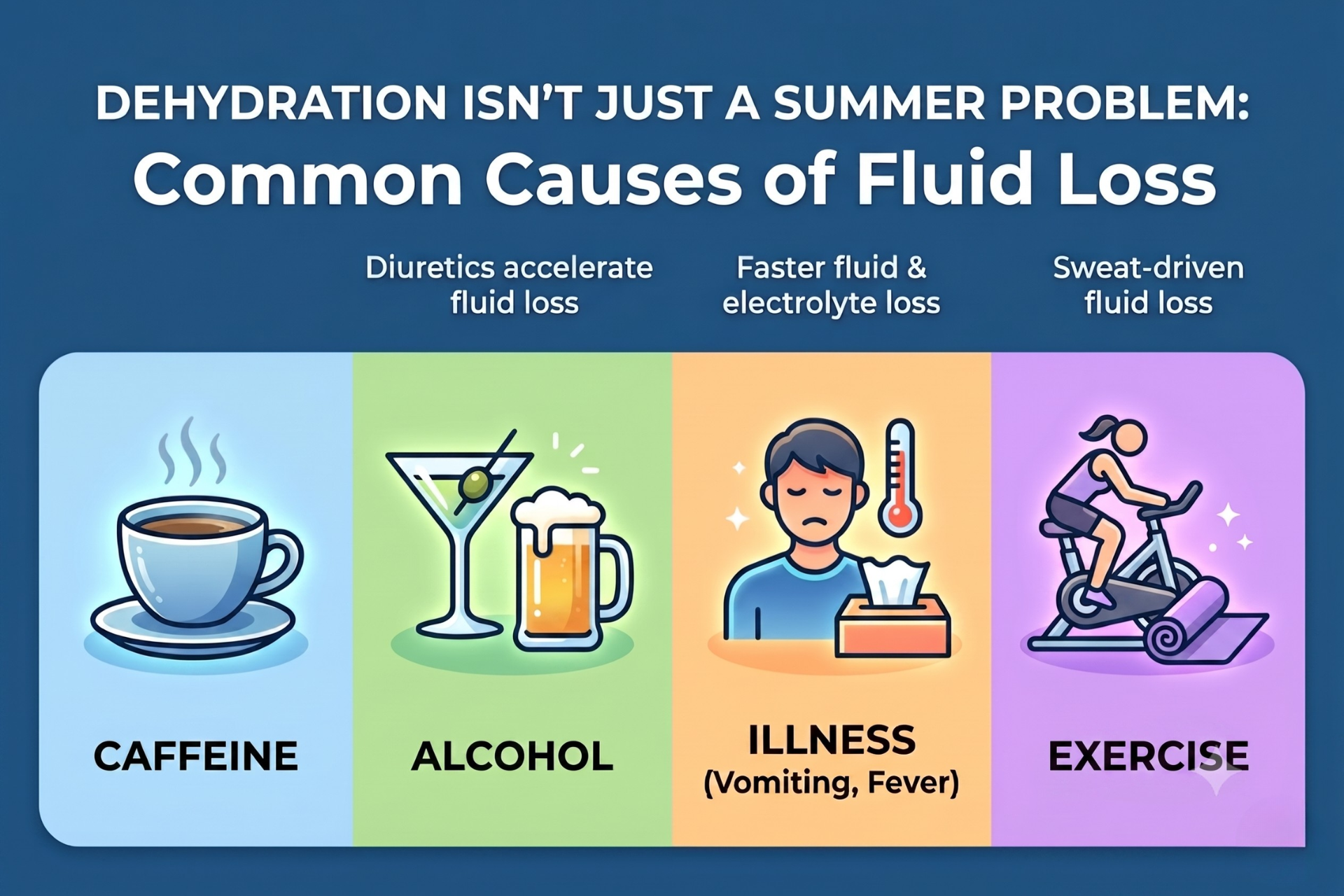 Image Source: Gemini 2026
Recognizing the Symptoms: From Mild to Severe
Early signs of mild to moderate dehydration may include thirst, dry mouth, fatigue, headache, and difficulty concentrating. These overlap with so many common complaints that they're easy to attribute to a bad night's sleep or a stressful week.
Decreased urine output and dark colored urine are more telling. Pale yellow is the target; amber or darker signals the body needs more fluids now.
As dehydration shifts from mild to severe, signs may become more noticeable. Sunken eyes, slow rebound of dry skin, and reduced sweating during activity may be associated with dehydration. Over time, chronically low fluid levels may also affect how skin looks and feels, contributing to the appearance of dullness, reduced elasticity, and a less vibrant-looking complexion. These signs may help tell dehydration apart from fatigue or heat exhaustion. These visible changes can serve as reminders to pay attention to hydration habits and overall fluid intake.
More significant dehydration may be accompanied by symptoms such as a rapid heartbeat, dizziness, confusion, irritability, or noticeably reduced urination. These signs can indicate that the body is not getting enough fluids and electrolytes. If symptoms are severe, persistent, or concerning, seek guidance from a qualified healthcare professional.
When electrolyte balance drops with fluid loss, symptoms can change again. Loss of sodium, potassium, and magnesium may cause muscle cramps, nausea, and weakness. In severe cases, it can cause dizziness or an irregular heartbeat.
When Drinking More Water Isn't the Full Answer
For mild to moderate dehydration, steady fluid intake over several hours is often enough.
- Drink water often. You might also use an oral rehydration solution.
- Electrolyte drinks, sports drinks, or fruit juice can help replace fluids and electrolytes.
- Eat water-rich foods like cucumbers, watermelon, and leafy greens. Oral hydration may not always be enough to keep pace with fluid losses.
- During illness, heat exposure, or intense physical activity, the body can lose fluids and electrolytes more quickly than usual.
- In some situations, digestive discomfort or gastrointestinal symptoms may make it more difficult to consume or retain adequate fluids.
- After strenuous exercise, replenishing both fluids and electrolytes may help support normal hydration and recovery.
Individual hydration needs can vary based on activity level, environment, and overall health.
In these cases, IV hydration therapy may make a meaningful difference. Delivered directly into the bloodstream, physician-formulated IV hydration bypasses the digestive system entirely, delivering fluids and electrolytes that may support more complete absorption than oral intake alone.
Results may vary.
At Hydration Room, every IV therapy is tailored to your individual wellness needs by physicians and administered by trained medical professionals, not a one-size-fits-all approach.
FAQs About Fluid Loss
What are the first signs of dehydration?
Early signs of dehydration may include thirst, dry mouth, fatigue, and headache. Dark colored urine is also an indicator that your body needs more fluids.
How do you rehydrate fast?
Drink water or an oral rehydration solution consistently. For severe dehydration or illness-related fluid loss, IV hydration therapy may restore lost fluids and electrolyte balance more efficiently than drinking alone. Results may vary.
When does dehydration require medical help?
Seek medical attention if you experience severe dehydration symptoms like confusion, rapid heartbeat, or inability to keep fluids down. Severely dehydrated individuals may require immediate medical attention to avoid serious complications.
Key Takeaways
- Dehydration symptoms range from dry mouth and fatigue to severe dehydration signs like rapid heartbeat, low blood pressure, and confusion.
- Dehydration occurs from more than heat; illness, caffeinated drinks, alcohol, and indoor exercise may all drive fluid loss.
- Older adults are at greater risk because the thirst response weakens with age, making chronic mild dehydration more likely to go unnoticed.
- Dark-colored urine is one indicator that your body may need more fluids.
- For mild to moderate dehydration, an oral rehydration solution can help restore lost fluids and electrolyte balance.
- When dehydration is severe or fluids can't be kept down, IV hydration therapy delivers physician-formulated fluids directly to the bloodstream, which may support absorption. Results may vary.
Staying Ahead of It
One of the most effective strategies to help prevent dehydration is consistency.
Drink enough water throughout the day rather than catching up after the fact. Be mindful of how caffeinated drinks and alcohol affect your fluid balance. Increase fluid intake around physical activity, illness, or travel. And pay attention to the signals your body sends.If you've been running on low and want to know whether IV hydration therapy could be part of your wellness routine, Hydration Room can help. Book a consultation with our medical team.
