
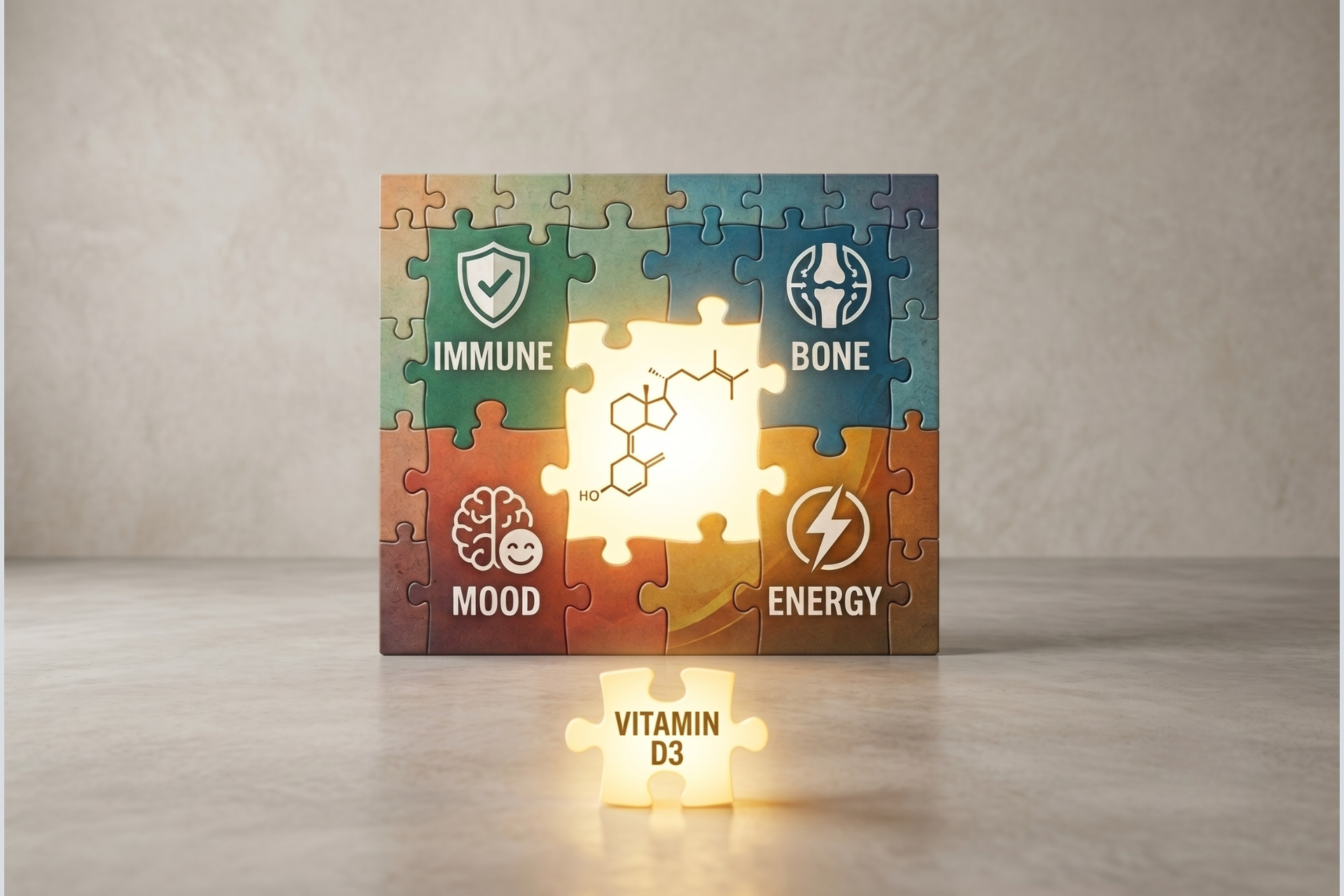
 Vitamin D3 deficiency affects an estimated 35% of American adults, yet most have never had their levels checked. Low sun exposure and poor dietary sources make it difficult to maintain adequate levels, potentially affecting immune function, mood, bone health, and cellular vitality.
You eat well. You take care of yourself. Yet something still feels off. Low energy, a sluggish immune response, a mood that doesn't quite match your lifestyle. If that sounds familiar, it might be time to check your vitamin D levels.
Vitamin D deficiency affects an estimated 1 billion people worldwide, and in the United States, roughly 35% of adults have inadequate levels. Despite the widespread prevalence of low vitamin D, it remains an often-overlooked gap in routine wellness care.
Nicknamed the sunshine vitamin because sunlight triggers its production in the skin, vitamin D is deceptively hard to maintain in modern life.
What Vitamin D Actually Does
Vitamin D regulates essential processes throughout the body, from immune defense and bone density to mood stability and cellular repair. Unlike most vitamins, it functions more like a hormone, with receptor sites found in nearly every tissue.
- Immune regulation. Vitamin D helps activate the immune cells that defend against infection. Low vitamin D could contribute to a weaker immune response over time, though results vary by individual.
- Bone health and calcium absorption. Vitamin D helps the body absorb calcium and is essential for bone health throughout life. Without adequate levels, bone density may decrease over time.
- Mood and mental wellness. Research has found an association between low vitamin D and symptoms of fatigue, depression, anxiety, or mood swings, and low vitamin D could contribute to depression or mood changes in some people.
- Muscle function. Vitamin D regulates your muscle contractions and plays a role in overall muscle strength. Muscle aches, reduced strength, or persistent back or bone pain may all be signs of a vitamin D deficiency worth investigating.
- Cellular function. Vitamin D helps coordinate how cells communicate, divide, and repair, making it relevant to long-term vitality and healthy aging.
Why Modern Life Makes It Hard to Get Enough Vitamin D
Your body produces vitamin D primarily through sun exposure, but most people aren't getting nearly enough. Sunscreen, time spent indoors, geographic location, and seasonal changes can all limit your skin’s exposure to the UV rays your body needs to synthesize vitamin D naturally.
If you live north of the 37th parallel, think San Francisco and above, your body may produce little to no vitamin D during the winter months.
Dietary sources alone rarely close the gap. While egg yolks, fatty fish, and fortified foods like milk and orange juice do contain vitamin D, the amounts are typically too low to meet daily needs without eating them in very large quantities, very consistently.
Vitamin D supplementation is commonly recommended based on individual blood test results and physician guidance.
What are Low Vitamin D Symptoms?
Signs of vitamin D deficiency may include:
- persistent muscle aches and weakness
- back pain
- frequent illness or slow recovery
- mood changes
- fatigue that doesn't resolve with rest
Severe vitamin D deficiency may lead to more pronounced symptoms and affect how you feel day to day.
At Hydration Room, our medical team sees vitamin D deficiency in patients of all ages. It's among the most common nutritional findings we encounter, and it may be addressable once you know where you stand.
A simple blood test is where that conversation starts.
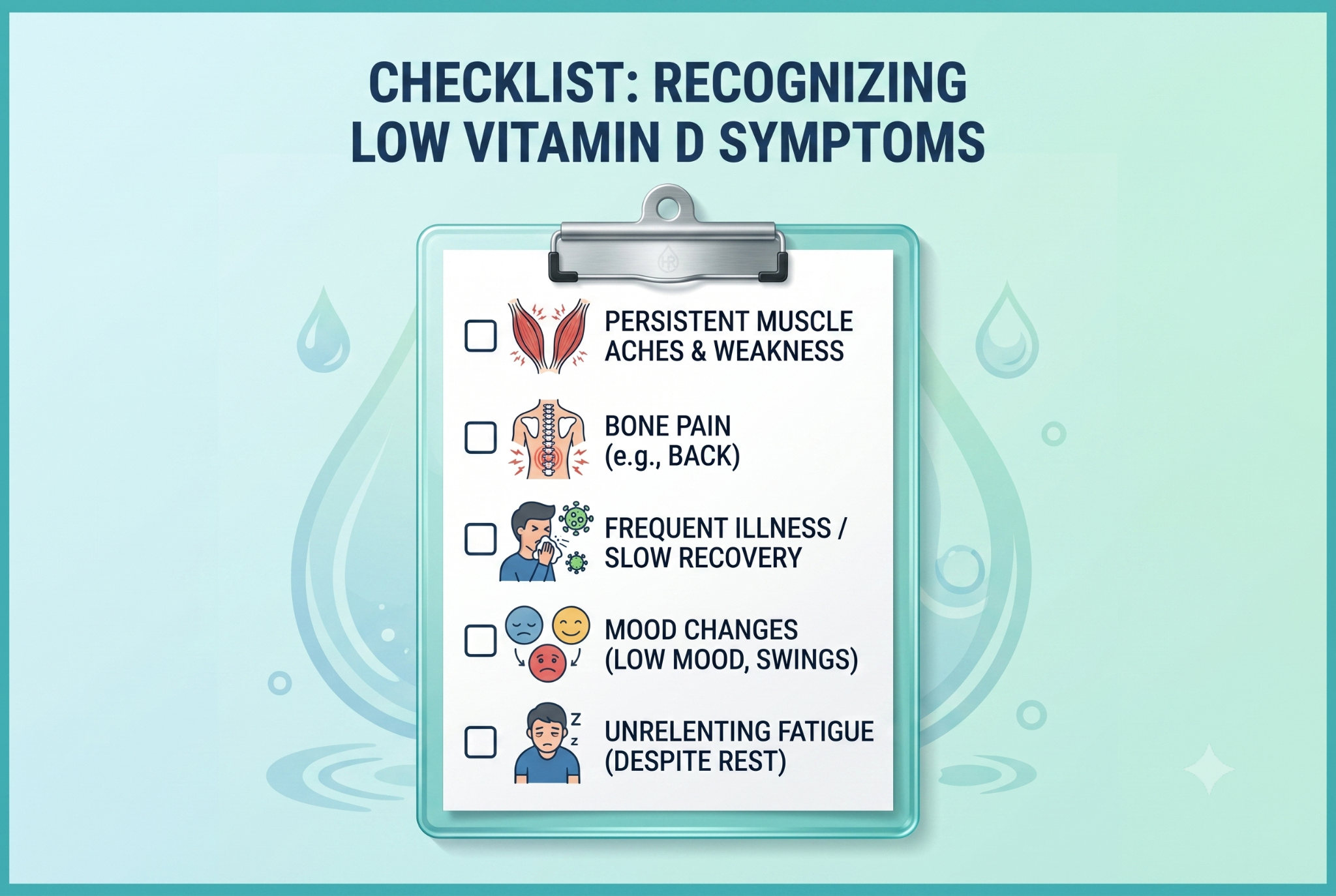 Image Source: Gemini 2026
FAQs About Vitamin D3 Deficiency
What are the most common low vitamin D symptoms?
Fatigue, low mood, frequent illness, and muscle weakness are among the most commonly reported signs. Because these overlap with other issues, vitamin D3 deficiency may go unidentified without testing. Results and presentations vary by individual.
What causes low vitamin D levels in the body?
Modern life works against vitamin D production. Time spent indoors, sunscreen use, geographic location, and seasonal changes all limit the amount of UVB light that reaches your skin, and without adequate UVB exposure, your body can't synthesize vitamin D naturally. Dietary sources can help, but rarely bridge the gap on their own
How does vitamin D3 affect immune health?
D3 plays a direct role in activating immune cells that respond to infection. Research has linked lower D3 levels to reduced immune resilience and slower recovery from illness. Individual responses may vary.
How is vitamin D deficiency addressed?
Getting more sun exposure, eating foods like fatty fish, egg yolks, and fortified milk or orange juice, and taking vitamin D supplements may all help support healthier vitamin D levels. For those looking for a more direct approach, vitamin D3 is available in several Hydration Room IV infusions and injections, delivered intravenously to allow the nutrient to enter the bloodstream directly.
A physician-guided blood test is the most reliable way to understand where your levels stand and what approach may work best for you.
Results vary by individual.
Key Takeaways
- An estimated 35% of American adults have insufficient vitamin D3 levels, yet deficiency often goes undetected
- D3 functions like a hormone, influencing immune regulation, bone health, mood, and cellular function
- Limited sun exposure and poor dietary sources may make adequate levels difficult to maintain through lifestyle alone
- Low vitamin D symptoms, including fatigue and immune dips, are easy to misattribute to other causes
- Optimal D3 levels vary by individual, making physician-guided testing and personalization important
A Personalized, Physician-Guided Approach
Because optimal vitamin D levels vary from person to person, there's no universal protocol. A physician-guided wellness plan may incorporate targeted vitamin D support, including dietary supplements or other options, based on your current levels, health history, and specific goals.
Whether that's immune resilience, healthy aging, bone health, or simply feeling like yourself again, the right place to start is understanding your numbers.
Ready to balance your low levels? Start with a consultation at your nearest Hydration Room location.
