
Jet lag disrupts your sleep, energy, and focus for days after crossing time zones. Stay ahead of it at every stage of travel by staying hydrated, getting natural light exposure, eating balanced meals, and using IV therapy to replenish depleted nutrients.
You plan every detail of your trip: the flights, the hotels, the itinerary, the reservations. But when was the last time you planned how your body would feel when you got there?
Travel is one of those things that looks effortless on paper but genuinely takes a toll in practice. Crossing multiple time zones, especially by plane, can disrupt your circadian rhythm, contribute to dehydration, and deplete the nutrients your body relies on to support energy, focus, and overall wellness.
Jet lag is rarely just about feeling tired. It’s a full-body experience that can be supported with the right measures. For anyone who travels frequently, takes long-haul international flights, or simply wants to support their health and well-being before stepping onto a plane, there is a smarter way to approach it.
IV therapy, used proactively at each phase of a trip, may help your body stay ahead of the curve rather than scrambling to catch up.
What Jet Lag Does to Your Body
Most people chalk up post-travel exhaustion to simple tiredness, but the symptoms of jet lag are more complex than that.
When you cross time zones, your body's internal clock falls out of sync with the local environment. Your circadian rhythm, which governs sleep, digestion, hormone release, and body temperature, is calibrated to your home time zone.
Arriving in a new time zone doesn’t automatically reset it. Your body clock keeps running on the old schedule, which is why jet lag symptoms like difficulty sleeping at night, daytime drowsiness, stomach aches, and trouble concentrating are so common even after a full night in a hotel bed.
How Long Do Jet Lag Symptoms Last?
According to sleep medicine research and guidelines from the Centers for Disease Control, it takes roughly one day per time zone crossed for the body to fully adapt. That means flying east across six time zones could leave your circadian system out of sync for nearly a week.
Traveling east tends to be harder on the body than traveling west because flying east requires you to fall asleep earlier than your body clock naturally wants to, while traveling west allows you to stay awake later, which most people find easier.
The Physical Side Effects Beyond Fatigue
Jet lag symptoms frequently extend beyond poor sleep. Cabin pressure on a long flight drops to the equivalent of 6,000 to 8,000 feet above sea level, and in-flight humidity can fall as low as 10 percent.
The result may be accelerated dehydration that worsens headaches and compromises mental and physical performance, while recycled air and crowded airports strain the immune system.
You may also experience stomach problems and general malaise that do not fully resolve until your body adjusts to the new schedule.
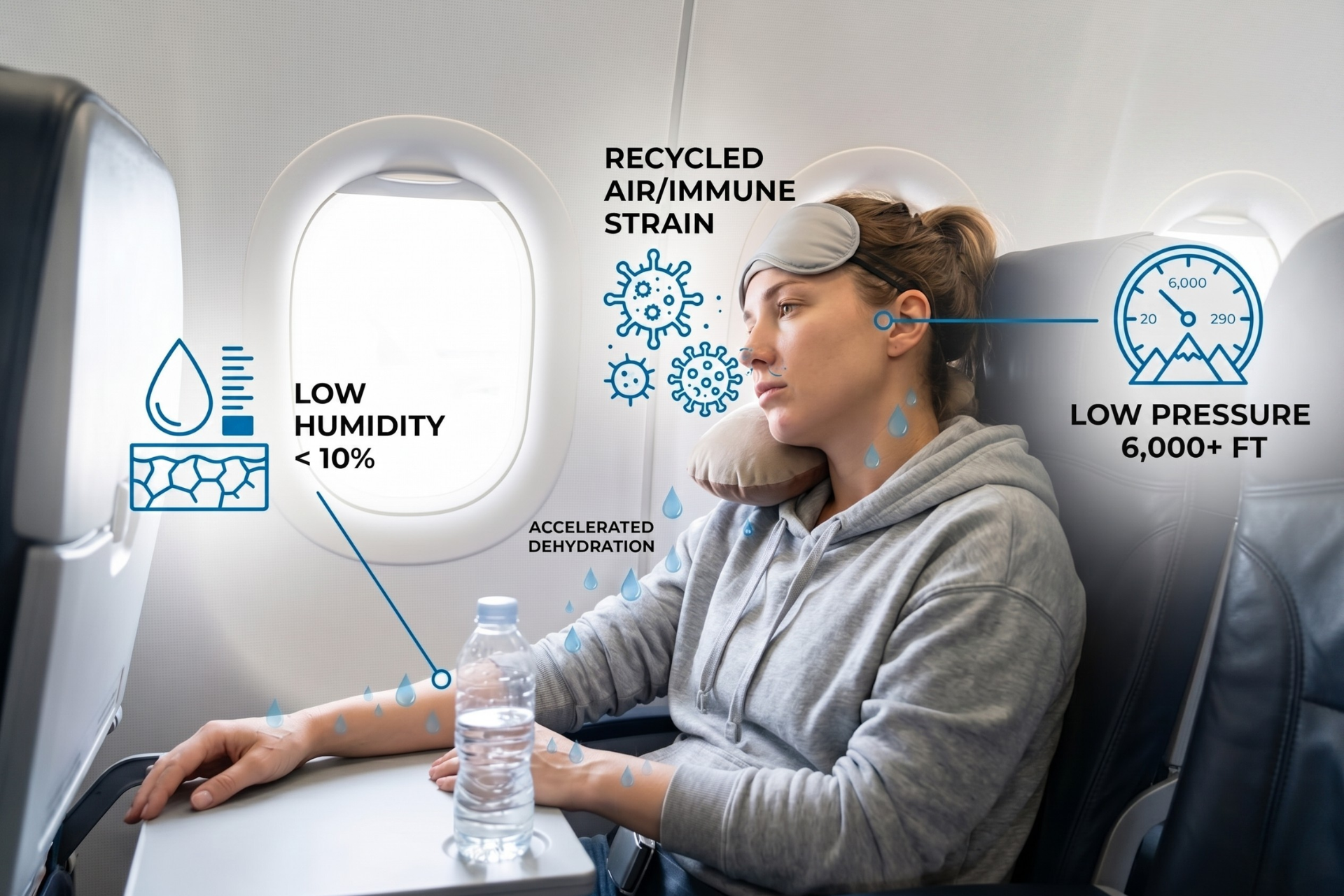 Image Source: Gemini 2026
Before You Go: Preparing Your Body for a New Time Zone
In the days before your departure, taking Vitamin C may support immune health. Its effect on immune function may help your body respond more effectively to environmental stressors, such as new pathogens and fluctuating climates.
Zinc works alongside it, helping immune cells communicate and respond to threats.
Equally relevant are the B-complex vitamins, foundational to energy metabolism. Crossing time zones can be stressful for the body, and some research studies have found that B vitamins may help reduce stress symptoms. Loading up before a long flight may help you arrive feeling like you have more energy in reserve.
Adjusting Your Sleep Schedule Before Departure
Sleep medicine specialists often recommend gradually shifting your sleep schedule in the days leading up to your flight.
If you’re traveling east, go to bed and wake up 30 to 60 minutes earlier for a few days before departure. If you’re flying east across many time zones, even small adjustments can help your body clock begin to adapt before you board.
How a Pre-Travel IV Session Fits In
A pre-travel IV therapy session at Hydration Room is designed with exactly this in mind. Taking immunity-supporting vitamins before your flight may help your body adjust better to new environments.
Physician-formulated blends can be customized to prioritize supporting immune fortification, hydration, and B-vitamin replenishment, delivered directly into the bloodstream for bypassing the digestive system faster, with more complete absorption than oral supplements alone.
Booking two to three days before departure gives your body time to respond and may help you board in a better-hydrated state.
During the Trip: Staying Ahead of Jet Lag Mid-Journey
Hydration and What You Eat
You’ve landed at your destination, and the trip starts. Here’s what you can do during your trip to help support lessening jet lag’s effects.
- Stay hydrated throughout your journey. Drink plenty of water and electrolytes in flight and avoid too much caffeine, particularly in the afternoon and evening hours after you land. Caffeine used strategically in the morning can help you stay alert and help you reach a normal bedtime in your new time zone.
- Avoid alcohol as well. It disrupts REM sleep and contributes to dehydration, both of which worsen jet lag.
- Eat smaller meals rather than heavy ones during and immediately after travel. Eating smaller, balanced meals may help support digestive comfort and more restful sleep while traveling.
- Align your meals with local time at your destination as soon as you arrive, as meal times play a meaningful role in resetting your body's internal clock, along with light exposure.
Light Exposure as a Reset Tool
Natural light is one of the most powerful tools for resetting your body clock. Light exposure sends direct signals to your circadian system, telling it what time of day it is in your new environment.
- When traveling east, seek bright, natural light in the morning and avoid light in the evening.
- When traveling west, do the opposite: avoid light in the morning and seek natural light in the evening. Even on cloudy days, outdoor light exposure matters and may help your body adjust to the new time zone faster than staying indoors.
Use an eye mask on the plane to block light when you need to sleep, and keep your sleep environment cool and dark at your destination to promote quality sleep.
Movement and Circulation
Physical activity during and after a long flight, including brief walks, stretching, and short outdoor walks in natural light, may help increase circulation and keep jet lag symptoms from settling in.
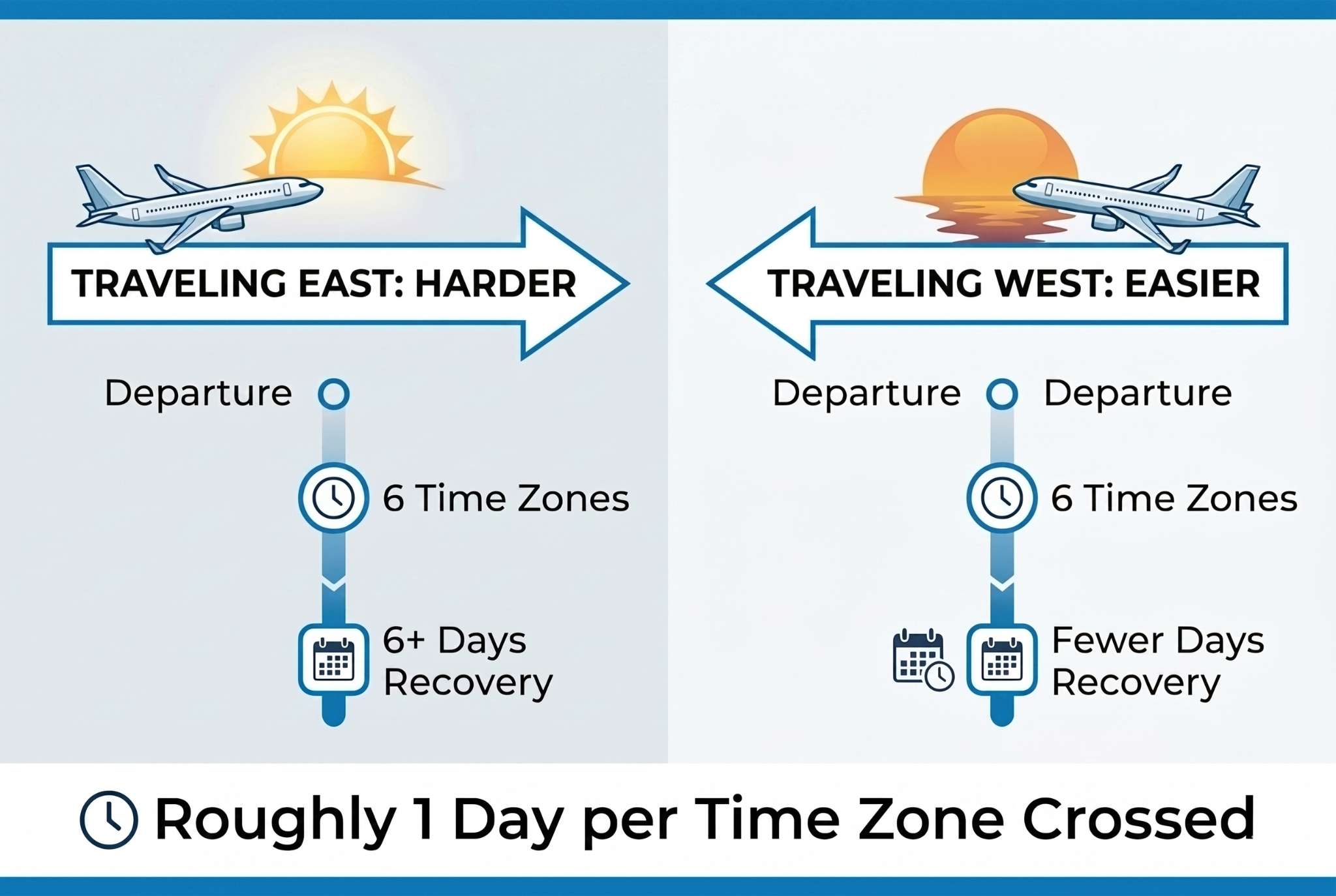 Image Source: Gemini 2026
After You Land: Real Jet Lag Recovery
This is where most people find themselves, searching for how to recover from jet lag faster at three in the morning, wide awake even though they're exhausted. Sound familiar?
Post-travel jet lag recovery is about replenishing what the journey depleted and giving your body the tools it needs to get over jet lag and re-sync. Hydration plus targeted nutrients delivered efficiently can help support overall wellness during travel recovery.
What a Post-Travel IV Session Includes
A post-travel IV therapy session at Hydration Room typically includes a Lactated Ringer hydration base to address dehydration accumulated in transit, along with a physician-formulated nutrient blend.
Depending on your goals, this may include the following:
- Vitamin C to fortify immune defenses stressed during plane travel
- B vitamins, which may help restore energy metabolism after crossing time zones
- Magnesium, which may help ease muscle tension and may support a more regular sleep pattern
- Electrolytes, which may help every system function as it should
- Glutathione, the body's master antioxidant, may help manage the oxidative stress that builds up from disrupted sleep, environmental exposure, and the general strain of air travel.
Magnesium deserves a particular mention for jet lag recovery. It plays a role in over 300 enzymatic processes in the body, including those that may affect sleep patterns, muscle relaxation, and the stress response.
Many travelers are mildly deficient in magnesium to begin with, and the demands of travel fatigue and disrupted sleep can deplete it further.
Who Is Jet Lag Recovery IV Therapy For
IV therapy for travel serves different goals depending on who you are and why you fly.
- If you travel frequently for work and can’t afford to arrive at a client meeting or high-stakes presentation running on fumes, building a pre- and post-travel routine around IV therapy may help you maintain the mental and physical performance your schedule demands.
- If you’re going on a vacation and want to feel your best during it, rather than spending the first few days adjusting, preparing your body before departure, and recovering strategically upon return, may make a meaningful difference in your overall experience.
What to Expect When You Book at Hydration Room
Booking a pre- or post-travel session at Hydration is straightforward. First, schedule your session online. On the day of, undergo a brief intake consultation with our medical professional who’ll align the right blend with your individual goals and health profile.
Sessions take approximately 45 to 60 minutes in a clean, comfortable setting, administered by a registered nurse using physician-formulated protocols. Results vary for every person.
FAQs About How to Get Over Jet Lag?
What is the fastest way to get over jet lag?
Aligning with your new time zone as quickly as possible is key. Get outdoor natural light at the right times, stay hydrated, eat meals on the local schedule, avoid alcohol and excessive caffeine, and consider a post-travel IV therapy session to help replenish nutrients and fluids depleted during your journey.
How long does it take the body to recover from jet lag?
On average, the body adjusts to each time zone at about one day per time zone crossed. Crossing six time zones can mean anywhere from a few days to nearly a week of jet lag symptoms before your circadian rhythm fully resynchronizes.
When does jet lag kick in?
Most people begin to experience jet lag within the first few hours after arriving in a new time zone, as the gap between their body clock and local time becomes apparent. Symptoms of jet lag typically peak on the first and second day after arrival.
Key Takeaways
- Symptoms of jet lag, such as fatigue, disrupted sleep, and stomach problems, stem from your body clock falling out of sync with a new time zone.
- Crossing time zones depletes key nutrients, such as Vitamin C, B vitamins, magnesium, and electrolytes; these nutrients may help your body may support overall wellness during adjustment
- A pre-travel IV therapy session may help support your immune system and hydration levels before a long flight.
- Natural light exposure, smaller meals, and avoiding alcohol are among the most effective ways to overcome jet lag mid-trip.
- Post-travel IV therapy may help replenish what air travel depletes, from dehydration to nutrient deficiencies.
- Results vary, but jet lag recovery IV therapy works best as part of a broader routine that includes quality sleep, hydration, and consistent meal times.
Your Next Trip Deserves a Recovery Plan Too
You put thought into where you’re going. Put the same consideration into how your body will feel when you get there and when you return.
Ready to feel your best from departure to arrival? Find a Hydration Room location near you and book your pre-travel or post-travel session today.
