
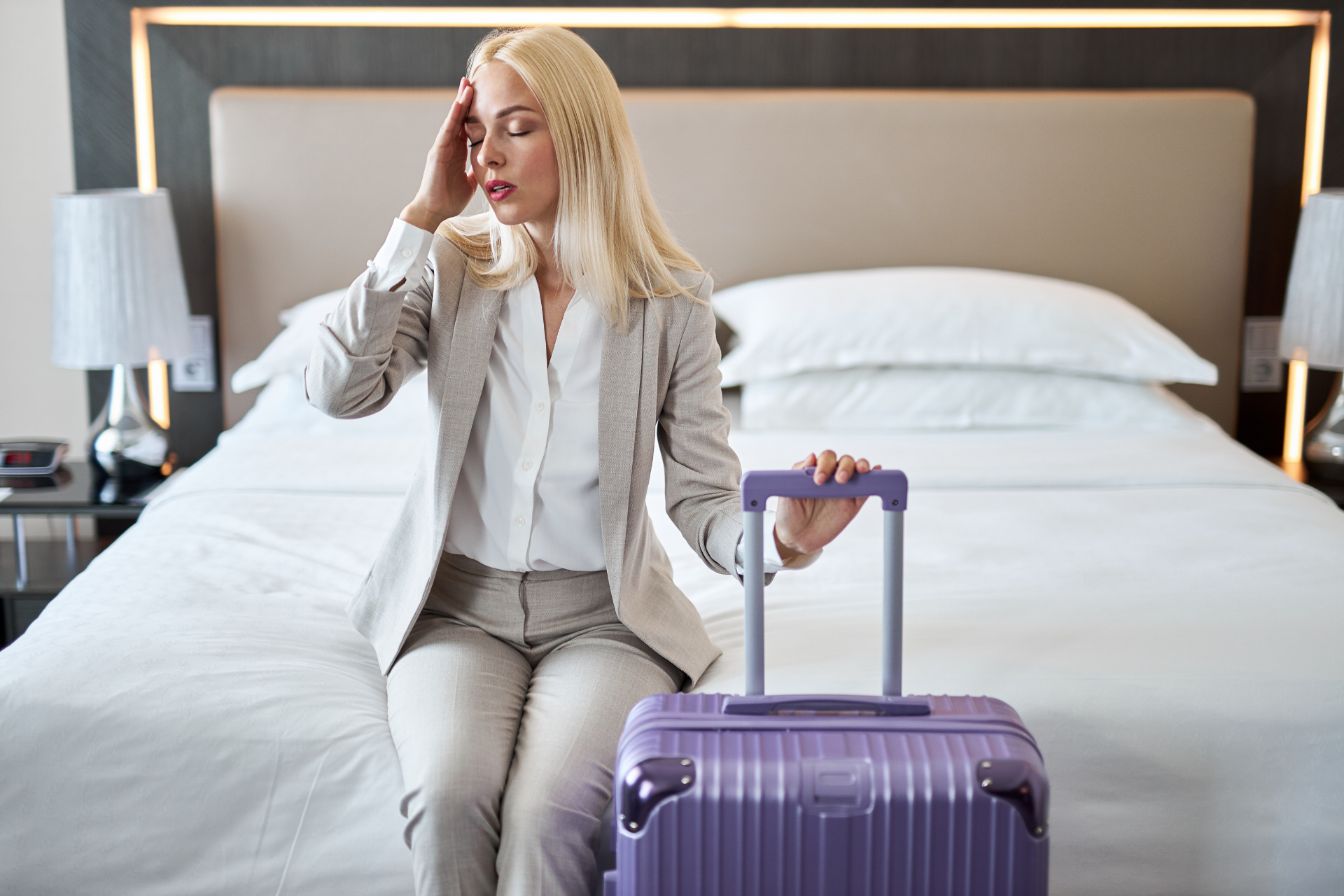
 Post-vacation fatigue affects most travelers. Disrupted sleep, immunity stress, dehydration, and nutritional gaps may leave your body feeling run-down for days after a trip. Rebuild your sleep schedule, stay hydrated, eat whole foods, and consider IV therapy to support your energy and overall wellness as you recover.
Vacations are meant for rest and relaxation. So, why do you feel even more tired now returning from a trip? You're exhausted in a way that sleep alone doesn't seem to fix. Your thinking feels slower, your body feels heavy, and getting back to everyday life feels harder than it should.
If you've ever needed a vacation from your vacation, you're not alone. Post-vacation fatigue is a real, common phenomenon, and there are physiological reasons it happens.
What Is Post-Vacation Fatigue?
Post-vacation fatigue refers to the physical and mental exhaustion that follows travel. It's that familiar feeling of returning home more tired than when you left.
While some people bounce back within a day or two, post-vacation fatigue symptoms can linger for up to two weeks, depending on the length of the trip, how many time zones you crossed, and how hard your body worked to keep up.
It's completely normal to feel exhausted after a vacation. The travel experience places real demands on the body, and those demands tend to surface all at once when you stop moving.
Why You Feel So Run-Down: Common Post-Vacation Fatigue Symptoms
Post-vacation fatigue is usually a combination of accumulated stressors your body has been quietly managing throughout the trip.
|
Cause |
What Happens |
What You May Notice |
|
Disrupted sleep patterns |
Unfamiliar beds, late nights, early flights, and time zone changes compound sleep debt and knock your circadian rhythm off course |
Exhaustion, irritability, difficulty concentrating |
|
Immunity stress |
The physical toll of air travel and crowded environments may place additional demands on immune health |
General sense of low energy or feeling off |
|
Dehydration |
Airplane cabin humidity, alcohol, heat, and a busy pace may leave most people mildly dehydrated by the time they land |
Low energy, headaches, difficulty concentrating |
|
Nutritional gaps |
Shifted eating habits, restaurant meals, and irregular timing mean key vitamins and minerals may be running low |
Low energy, physical fatigue, sluggishness |
|
The emotional shift |
Travel may trigger a dopamine response; the abrupt transition back to daily responsibilities may create a contrast effect that some people notice when returning to routine |
Low mood, low motivation, vague sense of flatness |
Physical fatigue and the emotional side of re-entry tend to compound each other. Addressing both is key to a smooth transition back to everyday life.
How Long Does Post-Vacation Fatigue Last?
For most people, post-vacation fatigue resolves within a few days to a week with intentional rest. How long post-vacation fatigue lasts depends on the length of your trip, how much sleep debt you accumulated, and how quickly you ease back into your usual routine.
If you're still feeling tired after two weeks, it may be worth checking in with a healthcare professional.
A Post-Vacation Recovery Framework
Getting back to feeling like yourself doesn't have to take long, but it does take intention. Here's a practical approach:
- Rebuild your sleep schedule. Aim for consistent sleep and wake times to help reset your sleep patterns and circadian rhythm. Even a few nights of quality rest may make a meaningful difference. Prioritize seven to nine hours and limit screens before bed.
- Stay hydrated and eat a balanced diet. Drink plenty of water and reach for hydrating foods like cucumbers and watermelon. Focus on whole foods, leafy greens, lean proteins, and colorful vegetables to help support energy levels and close the nutritional gaps travel tends to create.
- Support recovery with hydration-focused wellness options. For some travelers, supportive wellness services like IV hydration may help promote hydration and overall well-being after long flights, disrupted routines, and travel-related fatigue. These services are designed to complement healthy habits like rest, hydration, and balanced nutrition, not replace them.
- Move gently and practice relaxation techniques. Light walking, stretching, or deep breathing exercises may help ease stress, support circulation, and signal to your nervous system that it's safe to return to normal life. This is an important part of self-care that's easy to overlook when daily life picks back up.
- Give yourself adjustment time. Ease back into your post-vacation routine gradually. If traveling across time zones, account for jet lag recovery. Plan a buffer day before returning to work. One task at a time is enough.
FAQs About Fatigue After Vacation
Is it normal to feel exhausted after a vacation?
Yes. Disrupted sleep patterns, dehydration, and the physical toll of travel are all common contributors to post-vacation fatigue. Most people feel better within a few days to a week.
Why do I feel worse after vacation than before I left?
Travel can accumulate sleep debt, disrupt eating habits, and place stress on the immune system. Those effects often surface all at once when you're home and your body finally has a chance to rest.
Can IV therapy help with post-vacation fatigue?
A post-travel IV therapy session at Hydration Room may help support hydration, replenish key nutrients, and support renewed energy levels, helping you transition back to everyday life more comfortably. Results may vary.
Key Takeaways
- Post-vacation fatigue is normal and typically resolves within a few days to two weeks
- Disrupted sleep patterns, dehydration, and poor eating habits on the road are common culprits
- Rebuilding your sleep schedule and eating a balanced diet are foundational recovery steps
- IV therapy may help support hydration and energy levels. Results may vary.
- If fatigue persists beyond two weeks, check in with a healthcare professional
How IV Therapy May Fit Into Your Reset
Sometimes rest and good nutrition aren't quite enough to beat fatigue after vacation, especially when a full schedule is already waiting for you.
A post-travel IV therapy session at Hydration Room may offer a way to support your hydration and replenish key nutrients compared to oral intake alone. Results may vary.
Many guests find that a session may help ease physical fatigue, support mental clarity, and may promote renewed energy levels after travel, though results may vary. Our medical team can also help build a personalized plan based on where your body is and what it needs most.
You worked hard for that trip. Recovering well is just the other half of taking care of yourself. Because what’s more important than you?
Find a Hydration Room near you and book your post-travel reset today, so you can start looking forward to your next adventure.
