
 Menopause supplements may support bone strength, sleep, mood, skin, and energy as estrogen declines. Vitamin D, magnesium, calcium, and B vitamins are common starting points. Iron needs often drop at this time, so it’s best to get lab tests before adding more.
As estrogen begins to decline during menopause, your body's needs shift in ways that can feel sudden, even when the change itself is gradual.
Menopausal symptoms like changes in bone health and sleep connect back to declining estrogen, while shifts in mood, skin, and energy are common during this transition too, which means the right menopause supplements may matter more now than at any other point in life.
Nutrition at this phase focuses on understanding which supplements for menopause may support the changes your body is undergoing and why a one-size-fits-all approach can miss the mark. At Hydration Room, we focus on what’s shifting for you rather than on a generic supplement stack.
Personalization matters even more because dietary supplements don’t require FDA approval and aren’t regulated the way medications are. To add to that, 70% of women don't mention supplement use to their doctor, even though that conversation is often where personal guidance actually starts.
For menopausal women, that means matching menopause support to what's changing, not just adding more supplements to the cabinet.
Research into nutrient needs at this stage of life continues to evolve, but a few areas consistently stand out.
Menopause Nutrition: Bone Health Becomes a Bigger Priority
Estrogen plays a quiet but essential role in maintaining bone density, and its decline is one reason bone health becomes a greater focus during the menopausal transition.
Vitamin D, magnesium, and calcium may work together on the structural side of aging well, and getting the balance right can be more nuanced than simply adding a calcium supplement to your routine. A calcium-rich diet, paired with enough vitamin D, remains one of the most consistent ways to support skeletal strength as estrogen declines.
Weight-bearing movement, alongside a natural, food-first approach, can also complement these nutrients. Good sources are wild yam and non-GMO soy foods.
Our posts on calcium, magnesium, and vitamin D for bone health go deeper into what levels to look for and where to find these nutrients in food.
Sleep and Mood Deserve Their Own Attention
Sleep and mood often shift together during menopause, and magnesium and B vitamins are two nutrients commonly linked to both. Up to 80% of women experience hot flashes during menopause, which is part of why this area gets so much attention.
Magnesium may help calm an unsettled nervous system, and B vitamins are commonly used to aid energy production and day-to-day well-being.
Some women also notice headaches along with hot flashes and night sweats, and these menopausal symptoms often cluster together rather than showing up one at a time. Mood swings, in particular, may respond well to stable blood sugar levels, consistent sleep timing, and adequate intake of key nutrients.
Some women also consider vitamin E for mild hot flashes, though high doses may increase bleeding risk. Black cohosh may also be beneficial for some women, but talk to your healthcare practitioner, as it can cause allergic reactions in some people.
In many cases, steady sleep habits and gentle stress management may offer more meaningful menopause relief than relying on one supplement alone, and results vary. Ongoing sleep disruption may also raise the risk of low mood over time, which is part of why addressing both together tends to work better than handling them separately.
Neither is a standalone fix, but together they may help keep sleep more even and improve mood during menopausal changes.
Research on magnesium and hot flashes is still mixed, so it’s best viewed as one part of a broader sleep and stress routine rather than a fix on its own. Our pieces on magnesium and B12 cover dosing and food sources in more depth.
Skin and Hydration Change From the Inside Out
As estrogen declines, skin often changes before other systems do, and hydration and nutrition from the inside may matter as much as what you apply to the surface.
Hydration and specific nutrients may help the skin retain moisture and maintain its natural barrier over time. A nutrient-dense diet, rich in natural, whole-food sources, may also help support skin resilience alongside any supplement routine. Results vary from person to person, and topical care is only part of the picture.
What you're feeding your body from the inside matters just as much as what you're putting on it, especially as menopausal symptoms shift focus toward skin and hydration.
Cellular Energy and the NAD+ Connection
NAD+ plays a role in how your cells produce energy, which is one reason some people explore NAD-related support as part of a broader women's health routine during this transition.
Ongoing research continues to explore these pathways further and how they relate to overall health as estrogen levels shift. Our existing content on NAD+ covers the science in more depth, so if cellular energy is where you're feeling the biggest shift, that's the next place to look. Some people choose NAD+ IV therapy as part of their overall routine.
Why Iron Is the Exception in Menopause Vitamins, Not the Rule
Iron is the exception because most women need less of it after menopause, once monthly bleeding stops. That means low iron isn't something to assume or supplement for prevention. Instead, it's a flag worth testing for rather than guessing about, especially if fatigue or low energy persists despite addressing sleep, stress, and nutrition. A simple blood test can help determine whether iron is the issue before changing your diet or supplement routine.
Our guide, “How Iron Levels for Women Change Through Periods, Pregnancy, & Beyond,” explains this in more detail.
If you're noticing symptoms that don't seem to add up, our post on signs of low iron can help you recognize what to look for before adding another supplement to your routine.
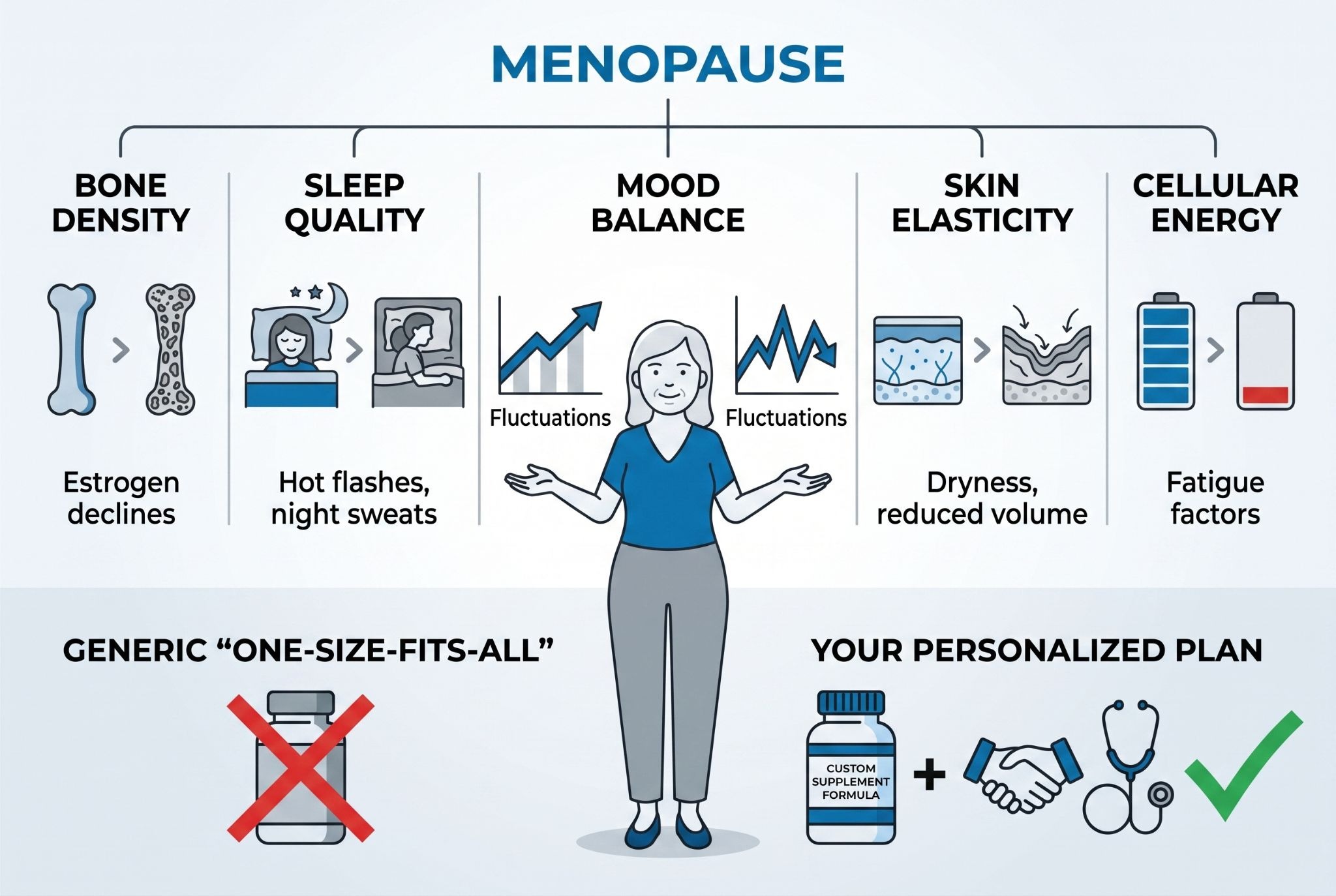 Image Source: Gemini 2026
FAQs About Menopause Supplements
What vitamins or dietary supplements should I take during menopause?
Vitamin D, calcium, and magnesium may support bone health, while B vitamins may help with mood and energy. The right menopause vitamins depend on your individual needs, so your doctor can help determine what's right for you.
Do menopause vitamins work?
Results vary. Some menopause supplements may support specific areas, such as bone health or sleep, but they work best as part of a broader approach rather than as a standalone fix.
Should I take iron supplements for menopause relief?
Not always. After menopause, iron requirements may drop because monthly bleeding ends, so low iron may be a sign to check for rather than something to assume. Instead of guessing, testing is recommended, especially if headaches or fatigue persist.
Is hormone therapy the only option for menopause symptoms?
No. Hormone therapy is one option some women discuss with their doctor, but nutrition, sleep support, and targeted supplements may be a meaningful part of the picture for many women and can also complement hormone therapy for those who use it.
Key Takeaways
- Menopause supplements for bone health, such as vitamin D, magnesium, and calcium, may matter more as estrogen declines.
- Magnesium and B vitamins may support sleep, mood, and overall well-being during menopause.
- Skin and hydration needs shift during menopause, and results vary from person to person.
- Iron needs often drop after menopause, so testing beats supplementing on assumption alone.
Supporting Your Body Through the Transition
Supporting your body through menopause means looking at bones, sleep, mood, skin, and energy together, since each shift ties back to declining estrogen. Menopause support looks at the whole picture of women's health, not just one symptom at a time.
At Hydration Room, our physician-formulated IV options are designed to help address these changing needs, alongside guidance from your own doctor. If you're ready to understand what your body needs at this stage, rather than guessing which menopause supplements to take, book a consultation to explore IV options for this stage of life.
