
Post-marathon recovery starts the moment race day ends. From muscle fatigue and lost fluids to electrolyte imbalance, marathon runners need a smart reset. Learn how IV therapy, amino acids, and proper hydration may assist recovery after endurance events.
For marathon runners, the finish line is the start of recovery.
Whether you’re doing your first big race or chasing peak performance as a seasoned endurance athlete, your body undergoes intense physiological stress on race day.
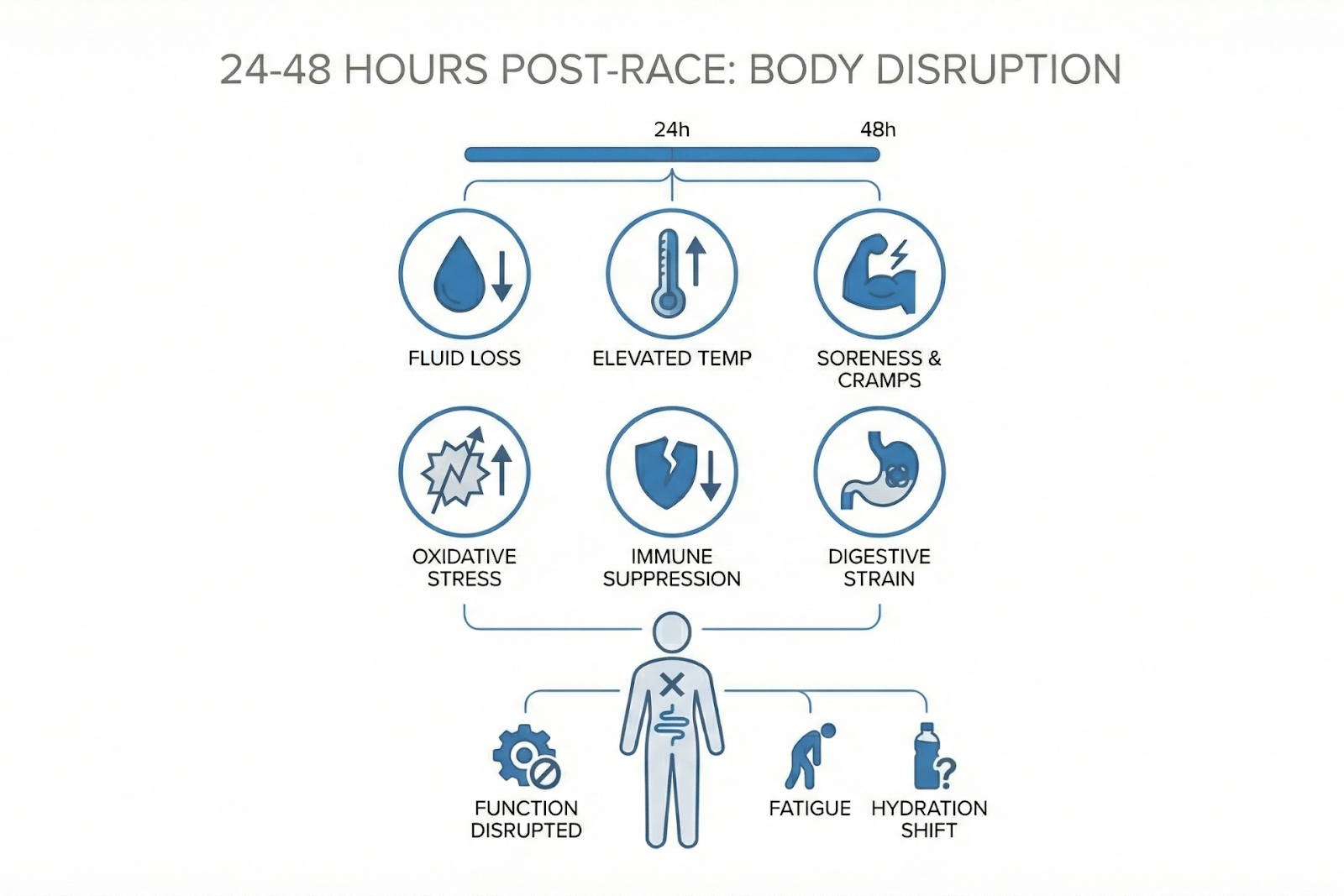
Hydration levels drop. Muscle fibers break down. Glycogen stores are depleted. The digestive system absorbs less efficiently, and sleep quality declines. Even the immune system can dip in the days that follow.
Post-marathon recovery is not optional. It’s essential for long-term athletic success. The first 48 hours after a marathon matter just as much as your training regimen before it.
What Happens to a Marathon Runner’s Body After a Race?
Even long-distance runners with disciplined training regimens can experience disruptions in muscle function, fatigue, and shifts in hydration status.
Proper hydration and nutrient replacement are central to effective post-marathon recovery.
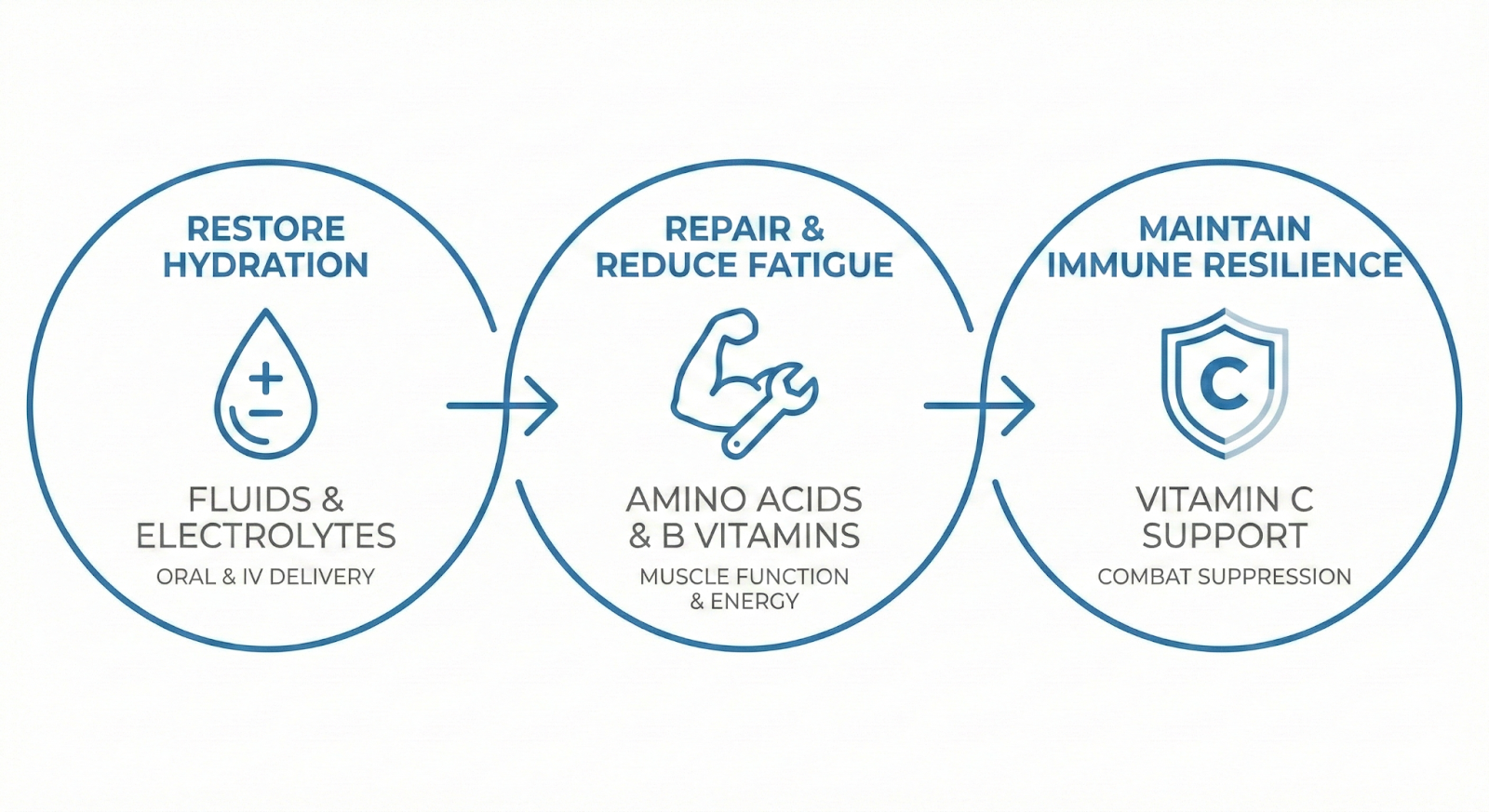
Step 1: Restore Proper Hydration
During the race, your body is pushed to its limits. With every mile, you lose fluid and essential electrolytes like sodium and potassium through sweat. By the time you cross the finish line, you may have lost several pounds, and your plasma volume and circulation were working harder than usual to keep up.
Even if you felt strong mentally, your body experienced measurable depletion at the cellular level.
That’s why what you do next matters. Rehydration isn’t just about quenching thirst; it’s about restoring balance. Replacing lost fluids helps stabilize blood flow, regulate body temperature, and support muscle recovery.
Just as importantly, restoring electrolytes helps your circulatory system function efficiently and allows your body to begin repairing the stress of endurance effort.
While many athletes instinctively reach for water, water alone may not fully correct the imbalance created during a marathon, half-marathon, ultra, or Ironman. Endurance events deplete sodium, potassium, and other key nutrients that help your cells properly absorb and use fluids.
- In some cases, especially after intense exertion, oral hydration may not be absorbed efficiently enough to restore optimal levels.
That’s why many endurance athletes prioritize electrolyte-enhanced fluids, nutrient-dense meals, and careful monitoring of hydration status in the hours following a race.
When those strategies still feel insufficient, some explore IV hydration therapy. IV therapy delivers fluids directly into the circulatory system, allowing for rapid replenishment of fluids and electrolytes without relying on digestion.
For athletes navigating post-marathon recovery, maintaining proper hydration is foundational, and in certain situations, IV therapy can be an additional tool to support a smoother, faster return to balance.
Step 2: Promote Muscle Repair and Reduce Muscle Fatigue
During a marathon, your muscles don’t just get tired; they experience microscopic breakdown. Every stride creates stress within the muscle fibers, and in the days that follow, your body shifts into repair mode. That repair process depends heavily on nutrients, particularly amino acids and key vitamins that help rebuild what was depleted.
Component |
Role in Recovery |
Impact on Performance |
|
Amino Acids |
Facilitates muscle repair and nerve impulses |
Supports consistent muscle function and strength |
|
B Vitamins |
Converts fuel (nutrients) into usable energy |
Reduces fatigue and sustains energy production |
|
Combined Nutrients |
Minimizes recovery time after intense training |
Enhances future performance and readiness |
Amino acids are the building blocks of muscle tissue. After intense endurance effort, they help facilitate muscle repair, support proper nerve signaling, and restore consistent muscle function and strength. Without adequate amino acid availability, recovery can feel prolonged, and returning to training may take longer than expected.
At the same time, B vitamins play a crucial role behind the scenes. They may help convert the nutrients you consume into usable energy at the cellular level. After a race, when fatigue sets in and energy stores are low, adequate B vitamin support may help sustain energy production and reduce lingering exhaustion.
This is where IV fluids can connect directly to that recovery process. Rehydration can restore plasma volume and circulation, allowing nutrients to move efficiently throughout the body. When fluids are paired with supportive nutrients such as amino acids and B vitamins, they can help replenish losses during the race while supporting muscle repair and energy restoration.
Step 3: Maintain Immune System Resilience
It is common for marathon runners to feel run-down after a race since endurance events temporarily suppress immune function.
Vitamin C is often included in recovery protocols because it supports immune function and may help combat oxidative stress after intense exercise. Preserving immune system resilience is important for avoiding illness, returning to training sessions safely, and sustaining physical endurance.
Your body just carried you 26.2 miles, or more. Respecting that effort sets the foundation.
What’s Inside an Athletic Recovery IV?
Athletic-focused IV therapy often includes:
- IV fluids that restore hydration
- Amino acids promoting muscle repair
- B Complex vitamins that support energy production
- Vitamin C for stronger immune health
- Electrolyte for maintaining physiological balance
Each formulation should be discussed with a healthcare professional to ensure alignment with your training regimen and goals.
Are IV Fluids Good for Runners?
While IV therapy isn't a substitute for balanced nutrition or structured training, it serves as a focused recovery tool for marathon runners facing severe dehydration, cramps, or fatigue.
When administered by medical professionals, these treatments may efficiently restore hydration and electrolyte balance while promoting muscle recovery and energy production, helping athletes bridge the gap between intense exertion and optimal wellness.
Pro Tip: Athletes competing at elite levels should remain aware of World Anti-Doping Agency regulations before incorporating IV therapy.
Pre-Race vs Post-Marathon IV Therapy
Pre-race IV hydration is sometimes used to optimize hydration status and reduce pre-race fatigue. Meanwhile, post-marathon IV therapy typically focuses on rapid rehydration and the replenishment of fluids lost during exercise.
Whether preparing for marathon performance or managing post-marathon muscle soreness, hydration and nutrient strategies should always be discussed with a healthcare professional.
How Long Does Recovery Take?
Most marathon runners require 3–5 days for initial recovery, 10-14 days before resuming intense training, and much longer for ultra-marathon recovery.
The 10-10-10 marathon rule, which suggests 10 days easy, 10 days moderate, and 10 days rebuilding, is often referenced as a conservative return-to-training framework.
The goal is not simply to recover faster, but to recover intelligently while protecting muscle function, immune health, and long-term athletic success.

FAQs About the Benefits of IV and Athletic Performance
How long does post-marathon recovery take?
Most marathon runners need 3–5 days for basic recovery and 10–14 days before resuming intense training sessions, depending on hydration status, muscle fatigue, and overall athletic performance.
Is IV therapy good for runners after race day?
IV therapy may help treat dehydration, restore electrolyte balance, and replenish essential nutrients after intense exercise, especially when oral hydration alone does not fully correct lost fluids.
What happens in the 48 hours after a marathon?
After a marathon, your body undergoes muscle repair, plasma volume shifts, immune system stress, and digestive system disruption. Proper hydration, amino acids, and rest are critical during this post-race window.
Should I get IV hydration before or after a marathon?
Some endurance athletes consider pre-race IV hydration to optimize hydration status and post-marathon IV for rapid rehydration. Always consult a healthcare professional before incorporating intravenous therapy.
Key Takeaways
- Post-marathon recovery requires replenishing lost fluids and restoring electrolyte balance after race day stress.
- IV therapy for marathon runners may assist rapid rehydration when oral hydration falls short.
- Amino acids and B complex vitamins contribute to muscle repair and energy production.
- Vitamin C plays a role in immune system resilience following endurance events.
Where IV Therapy May Fit
Post-marathon recovery isn’t a single action, it’s a coordinated strategy. After restoring fluids, replenishing electrolytes, and supporting muscle repair, the goal is simple: help your body return to balance efficiently and safely. Hydration, balanced nutrition, targeted nutrients, and intentional rest all work together to rebuild what the race depleted.
For some athletes, IV therapy may serve as an additional layer of that strategy. By delivering fluids alongside supportive nutrients such as amino acids and B vitamins directly into the bloodstream, IV therapy can complement oral hydration and nutrition, particularly when rapid replenishment is a priority or digestion feels sluggish after intense exertion.
When administered by trained medical professionals, it becomes part of a thoughtful, recovery-focused plan rather than a quick fix.
Because the finish line isn’t truly the end. It’s the beginning of rebuilding: restoring strength, refining performance, and preparing for what’s next.
Pure, healthy you. Let’s build back stronger, together.
