
 Image Source: Pexels
Fatigue despite enough sleep may indicate low B12, since B12 benefits include energy production and red blood cell formation. Vegetarians, vegans, older adults, and people with absorption challenges run low most often. A provider can check your levels and whether B12 injections may be an option.
Your energy has a delivery system, and vitamin B12 is one of the parts that keeps it running. When B12 levels dip, even a well-rested, well-fed body can feel like it's running on empty.
At Hydration Room, we often hear about low energy, especially from people whose schedules don't leave room for an off day. Maybe you've got a board meeting at 9 and a workout at 6, and your energy has to show up for both.
Or maybe you're sleeping enough, eating well, and still dragging through your afternoon training session. If you've been feeling tired and low on energy, even after a full night's sleep, understanding the link between vitamin B12 and energy may help explain part of the gap.
What Vitamin B12 Does for Your Energy
Vitamin B12 energy support starts at the cellular level: B12, also called cobalamin, is a water-soluble vitamin your body uses to convert food into usable cellular energy. It's also essential for producing healthy red blood cells and supporting normal nerve function, which is part of why low levels may contribute to both physical fatigue and mental fog. B12 also works with folate to support healthy cell growth.
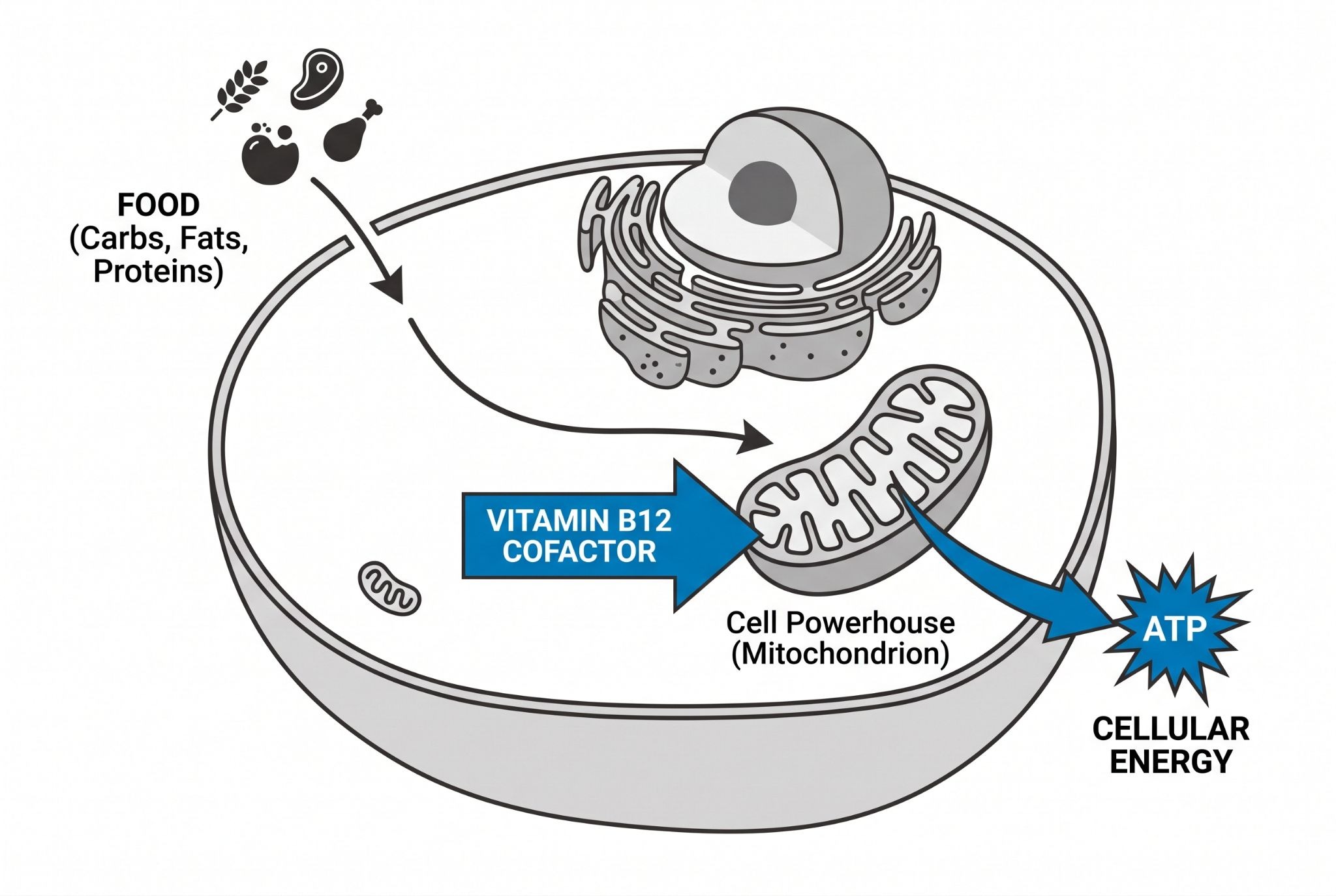 Image Source: Gemini 2026
Why Low B12 Often Shows Up as Fatigue
Every cell relies on a process that turns nutrients into energy, one that depends on vitamin B12 as a cofactor (a helper molecule certain enzymes need to work). Because vitamin B12 supports red blood cell production, low levels may reduce the efficiency of oxygen transport throughout your body, which may contribute to fatigue that doesn't seem to respond to rest, caffeine, or a good night's sleep.
Who Commonly Runs Low on B12?
Vitamin B12 deficiency isn't rare, and it tends to show up most often in vegetarians, vegans, older adults, and people with digestive conditions or medications that affect absorption.
Individuals with Busy Schedules and Skipped Meals
A packed calendar doesn’t raise your B12 needs on its own, but it may change how you eat. Skipped meals, grab-and-go convenience food, and plant-forward eating may mean that your intake quietly falls short of what you need.
That gap may be even easier to miss if you train regularly. Feeling wiped out after a hard session is normal, so when post-training fatigue starts lingering longer than usual, or workouts that used to feel manageable start to feel like a grind, it’s tempting to chalk it up to effort alone.
Since persistent tiredness can have many possible causes, it may be worth considering nutrition, including B12, alongside sleep, hydration, and recovery habits.
Vegetarians, Vegans, and Limited Animal-Based Diets
Vitamin B12 is found almost exclusively in animal-based foods, like fish, meat, eggs, and dairy, so people with a vegetarian or vegan diet are at a well-documented higher risk for deficiency.
Fortified foods and dietary supplements may help close that gap, though absorption still varies from person to person.
Older Adults and Absorption Challenges
As we age, reduced stomach acid and, in some people, lower intrinsic factor levels may make it harder to absorb B12 from food. Adults over 75 are at greater risk of B12 deficiency. People taking proton pump inhibitors (which reduce stomach acid) or metformin, and those with celiac disease or other digestive conditions, may also absorb less.
In these cases, oral intake alone may not be enough to maintain healthy levels.
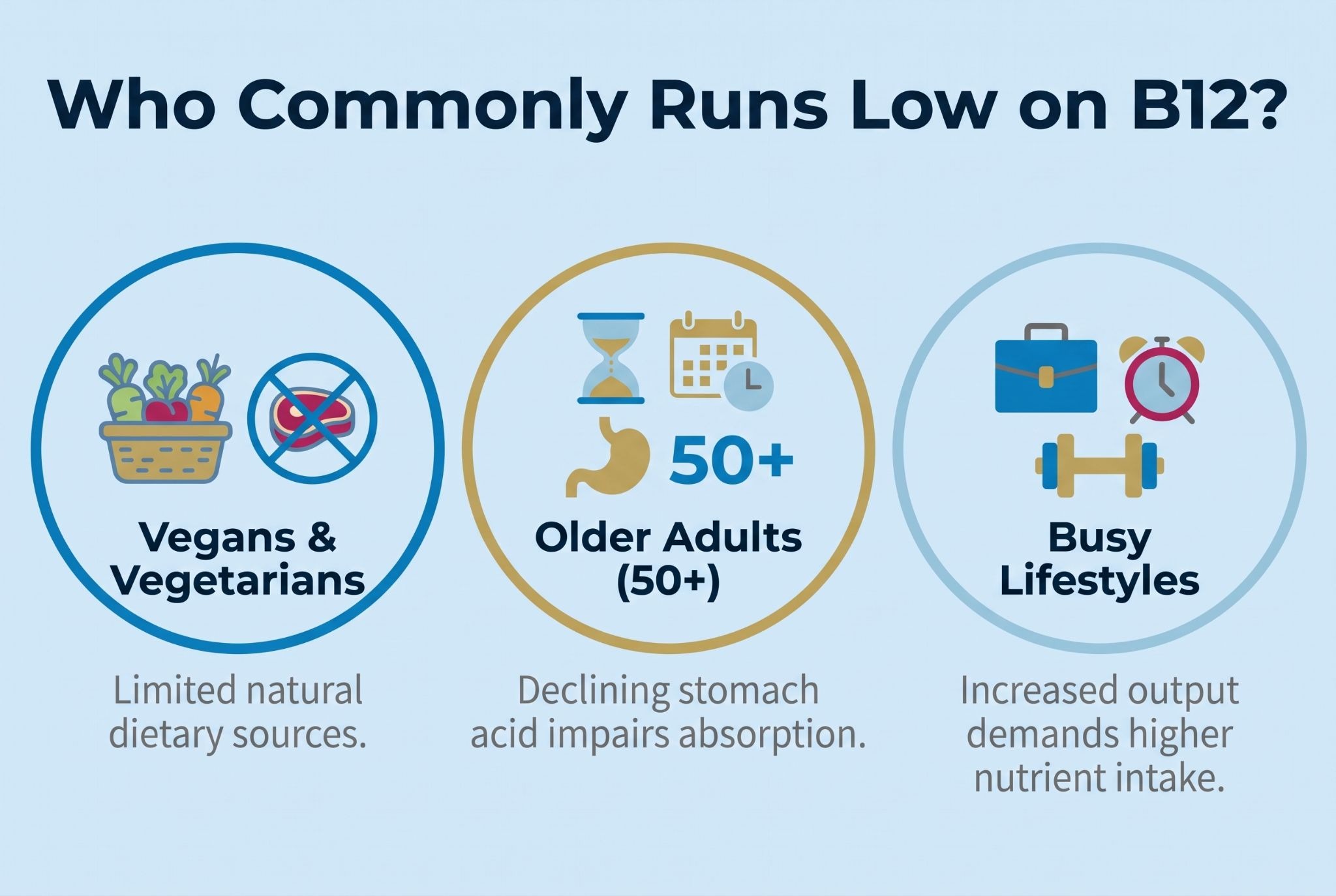 Image Source: Gemini 2026
How to Address Low B12 Levels
If you suspect your fatigue is tied to low B12 levels, the first step is to always consult your healthcare provider. Unexplained Fatigue can have many underlying causes, and vitamin B12 is one worth ruling out, alongside other common signs of vitamin deficiency. True deficiency is a diagnosis, not a guess.
From there, some people choose to explore options like B12 injections, which may offer a more direct way to support B12 levels than oral supplements, particularly for those with absorption concerns.
B12 is generally well tolerated, but results vary. An injection should never replace sleep, hydration, or medical care.
FAQs About B12 Benefits
Does vitamin B12 really give you energy?
Vitamin B12 doesn't create energy on its own, but it plays a role in converting food into usable cellular energy. Low levels may leave you feeling fatigued even with enough sleep.
What are the other symptoms of lacking B12?
The most common symptom is fatigue, though other symptoms can include muscle weakness, brain fog, and, in more advanced cases, nerve damage or vision problems. A healthcare professional can confirm whether these severe fatigue symptoms are tied to low vitamin B12 or another underlying cause.
How much vitamin B12 do I need daily?
Most adults need about 2.4 mcg of vitamin B12 per day. Adults over 50 are often advised to get much of their B12 from fortified foods or supplements, since absorption from natural sources may decline with age.
What happens to your body when you take B12 every day?
For most healthy adults, taking B12 daily helps maintain the levels your body uses for red blood cell production and energy metabolism. It’s generally well tolerated, and no upper intake limit has been set due to a low risk of toxicity. Results vary, so it's worth reviewing any new supplement or injection routine with your healthcare provider.
Key Takeaways
- Vitamin B12 helps convert food into usable cellular energy and supports healthy red blood cells.
- Persistent fatigue despite getting enough sleep may be a sign of low vitamin B12 levels.
- A healthcare provider can confirm whether a true vitamin B12 deficiency exists and whether B12 injections may be an option.
What to Do If You’re Always Tired With No Energy
If you've been feeling persistently tired despite doing everything "right," it's worth asking whether your levels are part of the story.
At Hydration Room, our physician-formulated B12 injections are designed to support your body's natural energy production, and they’re administered by trained professionals who take the time to understand what's going on. Results vary from person to person.
Book a consultation to find out whether B12 benefits, such as supporting healthy energy levels and red blood cell production, may be part of the answer.
