
 Ongoing fatigue often results from nutrient shortfalls, low-quality sleep, cortisol dysregulation, or dehydration rather than a single issue. Pinpointing the factor that affects you, through targeted lifestyle adjustments or nutrition-focused recovery support, may help naturally rebuild energy levels and ease tiredness.
With the heat of July and the hectic back-to-school rush of August behind you, September's arrival means your body is finally sending you the bill. If you've caught yourself thinking, "Why am I always tired?" even when you're sleeping enough, maintaining a decent diet, and following a healthy routine, you're definitely not alone.
Fatigue is one of the most common symptoms people search for, and for good reason. It rarely has one exact cause. It's usually several lifestyle factors stacking up until your energy levels just don't bounce back the way they used to.
The good news is that persistent fatigue usually has an underlying cause worth looking into, and many of those causes can be addressed. This guide from Hydration Room walks through the most common causes behind feeling tired all the time and how to tell the difference between everyday tiredness and something that deserves a closer look from a healthcare provider.
See where short-term recovery support, including physician-formulated IV and injection therapy, may fit into your daily life.
Post-Summer Energy Debt is Real
Late summer asks a lot of your body, and by September, it's simply calling in what it's owed. Think of the last two months like a loan against your own energy reserves.
Late nights, travel, extra socializing, poor sleep habits, and more alcohol than usual all draw from the same account. Your body covers the shortfall for a while, but eventually the balance comes due.
September is often when people notice constant fatigue the most. The schedule is more structured again; the adrenaline of summer has worn off, and there's finally a quiet moment to register how depleted you actually feel.
This isn't a coincidence, and it isn't a personal failing. It's a normal response to a demanding season, and understanding it is the first step toward managing fatigue going forward.
Common Causes of Fatigue to Know About
Persistent fatigue usually traces back to five overlapping categories: nutrient deficiencies, hormonal or cortisol imbalances, poor sleep quality, dehydration, and chronic stress. Most people experience more than one at once, which is exactly what makes chronic tiredness so hard to pin down.
Evaluating other symptoms alongside your energy levels can help narrow down the exact cause.
Nutrient Deficiencies
Several nutrients play a direct role in how your body produces and regulates energy, and vitamin deficiencies may leave you feeling drained, no matter how much sleep you get.
|
Nutrient |
Role in Energy |
May Show Up As |
|
Vitamin B12 |
Supports red blood cell formation and nervous system function |
Low energy, mental fatigue |
|
Iron |
Carries oxygen through the bloodstream |
Fatigue, shortness of breath, trouble concentrating |
|
Vitamin D |
May support energy regulation and overall well-being |
Low mood, sluggishness |
|
Magnesium |
Involved in muscle function and sleep quality |
Tiredness, restlessness |
A physical examination and basic lab tests from your healthcare provider are the most reliable way to identify whether a deficiency is contributing to how you feel.
Hormonal and Cortisol Dysregulation
Cortisol is the primary stress hormone your body produces. It runs on a natural daily cycle, climbing in the morning to boost alertness and falling in the evening to encourage restful sleep.
Ongoing stress from work demands, frequent travel, or a hectic summer schedule can throw this rhythm off, keeping cortisol elevated at the wrong times or too low when it’s needed.
This dysregulation can show up as a specific form of extreme fatigue: wired yet tired, difficulty falling asleep despite feeling exhausted, or a stubborn afternoon energy crash.
Sleep Disturbances and Sleep Quality
It's possible to spend eight hours in bed and still wake up tired. That's because energy recovery depends less on total hours and more on the quality of sleep your body gets, cycling through light, deep, and REM stages needed to repair and reset.
Even if the total duration of your sleep seems adequate, irregular sleep habits, screen use, alcohol consumption, and time zone changes can disrupt this cycle. Consider consulting a sleep medicine specialist if sleep issues persist for more than a few weeks, rather than waiting for them to resolve on their own.
Tracking your habits in a basic sleep log for one to two weeks can assist you and a medical professional in identifying the underlying reasons for your fatigue.
Learn More: How to Sleep Better: Habits & Nutrients That May Support Restful Sleep
Dehydration
Mild dehydration is a common cause of fatigue that often gets overlooked.
Even a small fluid deficit may affect concentration, mood, and physical energy. After a summer of heat, travel, and higher physical activity, many people are running behind on both fluids and electrolytes without realizing it.
Chronic Stress and Lifestyle Factors
Beyond its hormonal effects, ongoing stress simply takes energy to manage, and knowing how to manage stress is often as important as managing the fatigue itself.
Chronic fatigue can be compounded by irregular lifestyle choices, a lack of regular physical activity, and a poor diet low in whole grains and high in sugar. A diet heavy in refined carbohydrates, for example, causes blood sugar swings that frequently result in an afternoon slump.
Additionally, the body views a series of demanding deadlines, a packed travel calendar, or ongoing emotional strain as a major drain on its resources, which can eventually manifest as persistent exhaustion.

Image Source: Gemini 2026
When Fatigue Is a Signal to Dig Deeper
Not all fatigue calls for the same response, and it's worth knowing the difference.
Short-term, easy-to-explain fatigue often shows up after a clear period of poor sleep, travel, or high stress and usually improves within a week or two once the main trigger settles down. In these cases, practical self-care such as staying well hydrated, maintaining a consistent sleep routine, avoiding alcohol near bedtime, and making straightforward lifestyle tweaks may be especially effective.
Fatigue worth a closer look includes exhaustion lasting more than two to four weeks. This can happen even with enough sleep and can include tiredness along with other symptoms. It can be strong enough to disrupt your routine, daily tasks, and overall quality of life.
Guidance from the National Institutes of Health and the National Library of Medicine says this pattern may indicate a health issue. You may need a full assessment, not just rest or recovery tips. The best step is to discuss your specific symptoms with a healthcare provider, as this is more reliable than guessing the cause.
The honest answer is that fatigue is a common symptom, not a diagnosis. Treating the symptom without understanding its source only works for so long.
Where Nutrient-Based Recovery Support May Help
For fatigue linked to nutrient gaps, dehydration, or the general depletion of a demanding season, physician-formulated IV and injection therapy is one option some people use to help replenish nutrients and support energy levels.
Because it delivers nutrients, such as B12, iron, vitamin D, and magnesium directly, it may offer a more direct route to replenishment than a balanced diet or oral supplements alone, particularly for anyone whose absorption is already a limiting factor.
Nutrient-based support may help with fatigue from a real deficiency or short-term nutrient depletion. It’s not a fix for every kind of tiredness, and it’s not a substitute for checking for an underlying medical condition.
Results vary from person to person, and any nutrient-based plan works best alongside the basics: a healthy diet, enough sleep, regular exercise, and a healthcare provider who can help identify what's actually driving your feelings and support your overall well-being.
At Hydration Room, every plan starts with a conversation with our medical team, not a one-size-fits-all protocol.
Simple Habits for Fatigue Prevention
Fatigue prevention comes down to five wellness habits: protecting your sleep, staying ahead of hydration, balancing your plate, moving daily, and managing stress before it builds. None of these is a big fix on its own. Together, they're what keep your energy steadier all season.
- Protect your sleep schedule, even on weekends. Going to bed and waking up at roughly the same time each day supports more consistent sleep quality than simply logging more hours.
- Stay ahead of hydration rather than reacting to thirst. Small, steady fluid intake throughout the day helps prevent the dip in concentration and energy that dehydration can cause.
- Balance your plate. A diet built around whole grains, lean protein, and steady blood sugar, rather than sugar spikes and crashes, may help you avoid the afternoon energy slump many people describe.
- Build in regular exercise, even light movement like walking. Physical activity may support better sleep quality and may help regulate the same cortisol rhythm that chronic stress disrupts.
- Make space to manage stress before it accumulates. Short daily resets, even five or ten minutes, may help prevent the kind of chronic stress that quietly drains energy levels over weeks or months.
Small, consistent habits are what keep the "energy debt" from building back up in the first place. The goal isn't perfection, but staying a little ahead of the deficit rather than paying it off after the fact.
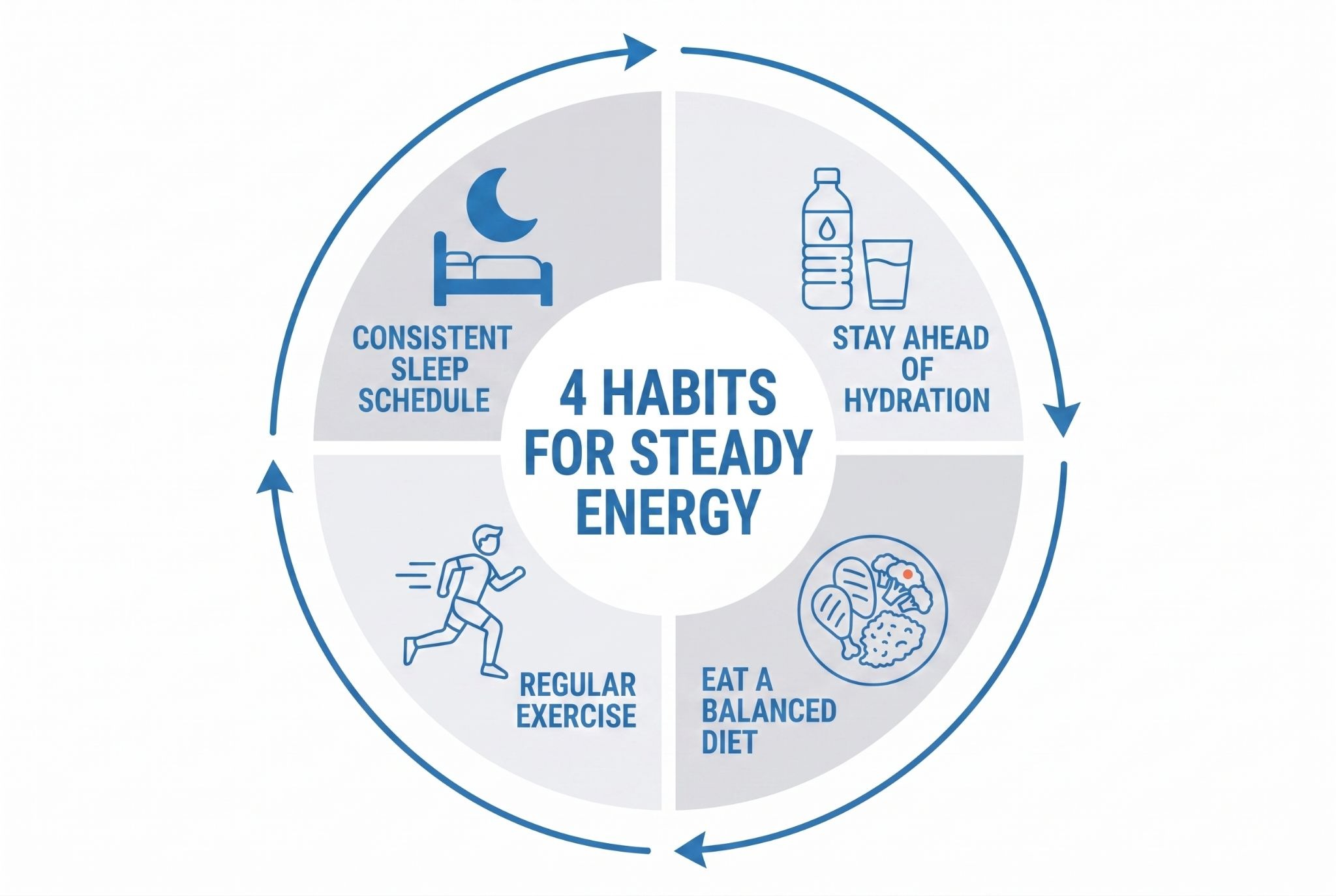
Image Source: Gemini 2026
FAQs About Chronic Tiredness
Why am I always tired and have no energy?
Ongoing fatigue is usually a mix of factors: nutrient deficiencies, poor sleep quality, dehydration, or chronic stress. Identifying which one applies to you, often with help from a healthcare provider, is the first step toward feeling better.
What is my body lacking if I have chronic fatigue?
Low B12, iron, vitamin D, or magnesium are common nutrient gaps linked to fatigue. A simple lab test with your healthcare provider can confirm whether a deficiency is contributing to how you feel.
Why do I feel so tired even though I get enough sleep?
Total hours matter less than sleep quality. Irregular patterns, screen exposure, and alcohol can all disrupt the deeper sleep stages your body needs to actually recover, leaving you tired despite time in bed.
How can I manage fatigue quickly?
Start with the basics: hydration, consistent sleep, and a balanced diet. If fatigue persists beyond a few weeks, nutrient-based recovery support and a conversation with your healthcare provider may help identify the root cause.
What are four common fatigue symptoms?
Common warning signs include extreme fatigue that doesn't improve with rest, trouble concentrating, low energy affecting daily activities, and disrupted sleep quality. If these symptoms persist beyond two to four weeks, a healthcare provider can help identify the cause.
Key Takeaways
- Persistent fatigue frequently stems from nutrient deficiencies, poor sleep quality, or chronic stress, not one single cause
- Post-summer energy debt is a normal response to a demanding season, not a personal failing
- Fatigue lasting more than two to four weeks deserves a conversation with your healthcare provider
- B12, iron, vitamin D, and magnesium all play a role in regulating energy levels
- Dehydration and poor lifestyle habits are common, often overlooked, causes of chronic tiredness
- Nutrient-based recovery support may help, but it works best alongside good sleep and a healthy diet
Catching Up on Your Energy Debt
If the last two months left you running on empty, you're reading the right kind of signal, not a reason to panic. Persistent fatigue almost always has a cause, whether that's a nutrient gap, poor sleep quality, cortisol out of rhythm, or simple dehydration from a long summer.
The next step is figuring out which of these applies to you and deciding whether that calls for a conversation with your healthcare provider or some straightforward recovery support in the meantime. Either way, feeling tired all the time doesn't have to be your new normal.
Ready to figure out what's behind your fatigue? Book a consultation with our medical team to build a plan that actually fits what your body needs this season.
