
 Yes, flying can dehydrate you. Low cabin humidity, air pressure changes, and fluid loss through breathing all pull moisture from your body mid-flight. Learn the common signs of dehydration and how to stay hydrated before, during, and after your flight.
You land, grab your bags, and something feels off. Your thinking feels sluggish, your skin feels tight, and no amount of airport coffee is fixing the fatigue. Whether you're stepping off a red-eye before a full day of meetings or recovering from a weekend away, that post-flight slump is real, and it's not just jet lag.
Air travel may be dehydrating you.
Can Flying Dehydrate You? Here's the Science
At cruising altitude, airplane cabins maintain low humidity levels, typically between 10% and 20%. Most indoor environments on the ground sit closer to 30% to 60%. That's extremely dry air, and your body is breathing it for hours.
The lower air pressure inside the plane cabin at high altitudes also causes your body to breathe faster and deeper, which accelerates moisture loss with every breath. Every hour in the air, that fluid loss compounds.
Add in recirculated dry air, the temptation of salty snacks, alcohol, caffeine, and the simple fact that most passengers don't drink enough water mid-flight, and you've got a near-perfect recipe for getting dehydrated before you even land.
It's Not Just About Water Loss
Here's what often gets missed: dehydration isn't only about how much water leaves your body. It's also about fluid balance.
Electrolytes, such as sodium, potassium, and magnesium, are what allow your cells to use the fluids you take in. When those levels drop, plain water alone has a harder time getting where it needs to go.
Low humidity and changes in air pressure also dry out your nasal membranes, leaving you with dry mouth, dry eyes, and chapped lips. Bloating is another common complaint. The lower cabin pressure causes gas in your digestive tract to expand, contributing to that puffy, uncomfortable feeling that lingers after landing.
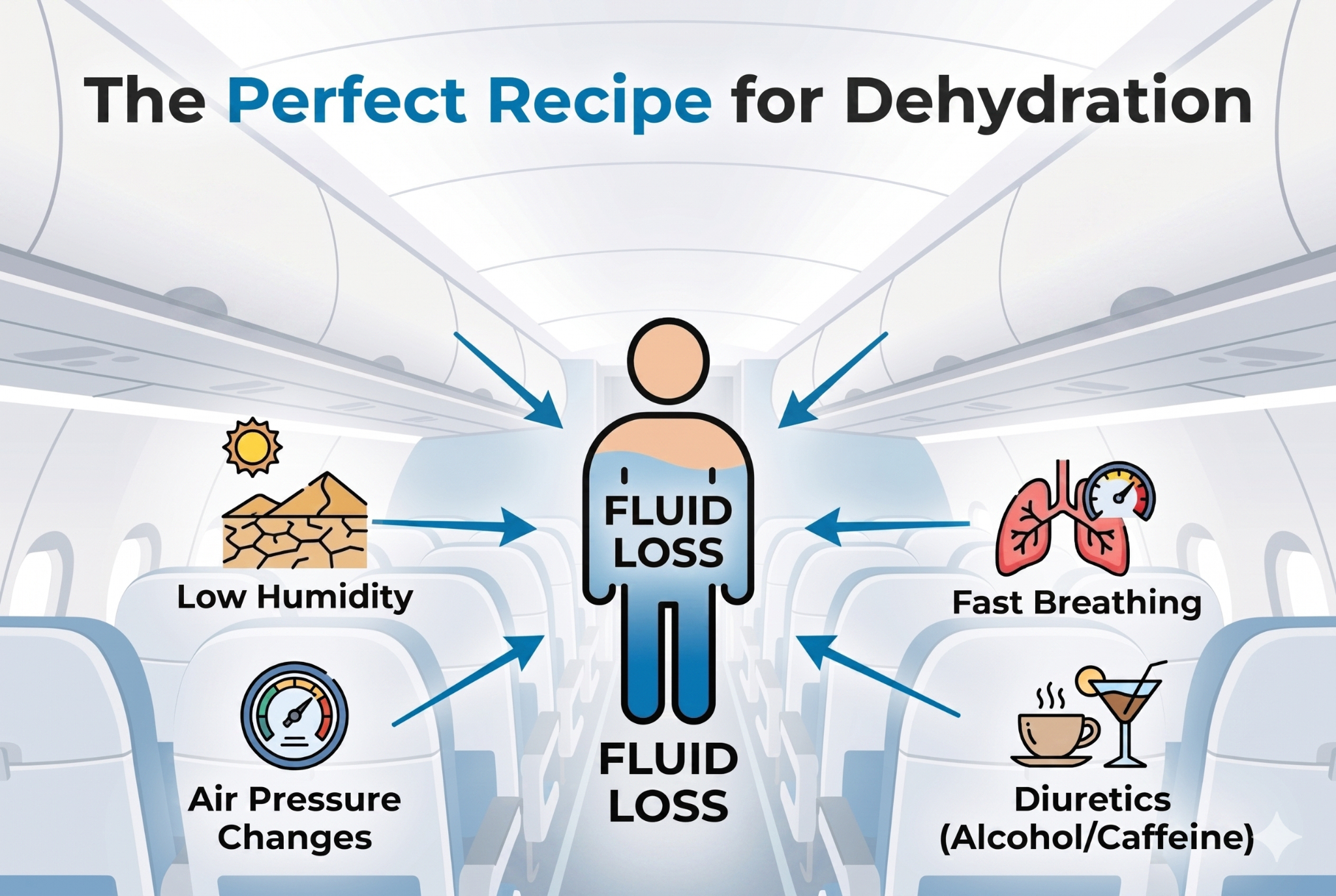 Image Source: Gemini 2026
What Happens If You Ignore It
Mild dehydration might just feel like fatigue and difficulty concentrating, but ignoring it on long-haul flights may lead to physical discomfort.
Dehydration may contribute to thicker blood, potentially affecting circulation on longer trips. Over time, chronic under-hydration during air travel may affect kidney and urinary health.
Why Water Alone May Not Be Enough
If you've ever chugged plain water after a long flight and still felt terrible, there's a reason. Drinking water gradually moves through your digestive system, and if your electrolyte mix is out of balance, your body may struggle to absorb and distribute fluids efficiently.
One option is to add electrolytes to your water, which may help your body absorb fluids more efficiently.
This is where IV hydration therapy may offer a more direct way to support fluid and nutrient levels compared to drinking alone. Results may vary. (Note: IV therapy isn’t intended to diagnose, treat, cure, or prevent any disease.)
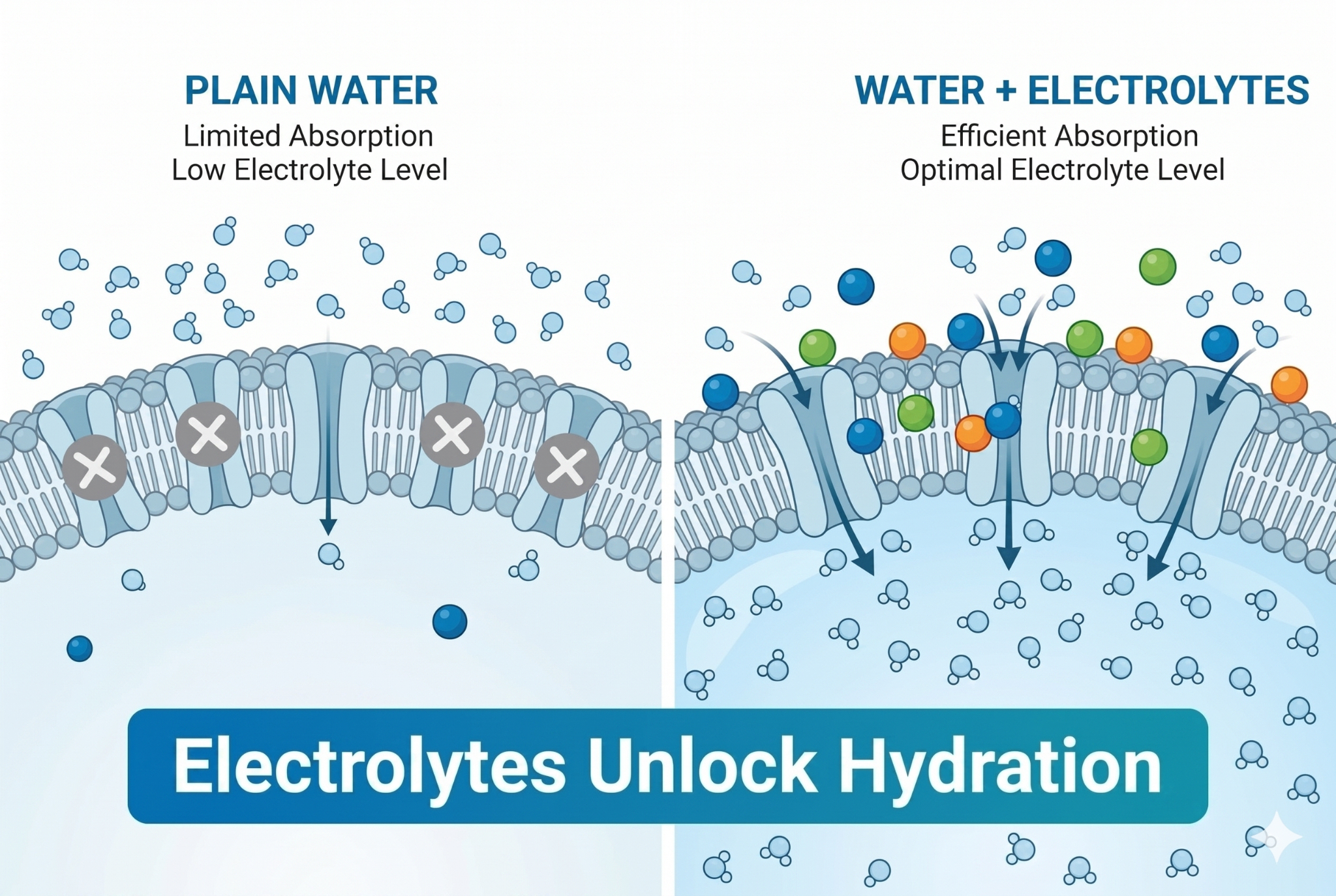 Image Source: Gemini 2026
How to Stay Hydrated Before, During, and After Your Flight
A few practical steps to avoid dehydration and protect your trip:
Before You Fly
- Drink plenty of water in the hours leading up to your flight.
- Pack hydrating foods, such as fruits and vegetables.
- Toss a refillable water bottle and a nasal spray in your carry-on bag. A saline nasal spray used every few hours can keep your nasal membranes moist.
During the Flight
- Aim to drink water every hour
- Avoid alcohol and caffeinated drinks where you can due to their diuretic effects
- Skip the salty snacks
- Choose an aisle seat for easier movement.
After Landing
- Prioritize enough fluids with electrolytes, not just plain water.
- Eat hydrating foods
- Rest if time zones have shifted your schedule.
- If you’re looking to support your recovery after landing, a post-travel IV session may be worth considering. Results may vary.
FAQs About How to Avoid Dehydration During Air Travel
How do you rehydrate after flying?
Drink electrolyte-rich water, eat hydrating foods, and avoid alcohol. For aided recovery, physician-formulated IV hydration therapy may offer a more direct way to support hydration and replenish key nutrients. Results may vary.
Do I need electrolytes during air travel?
Plain water may not be enough. Adding electrolytes may help your cells absorb and use fluids more effectively, making them a smart addition to your hydration plan before, during, and after air travel.
How long does dehydration after flying last?
Mild dehydration typically resolves within a few hours of landing with adequate fluids and rest. Longer or more intense flights may lead to symptoms that linger, especially if alcohol was consumed mid-flight.
What are common signs of dehydration after a flight?
Dry mouth, dry eyes, fatigue, headaches, dizziness, and difficulty concentrating are all common signs. If symptoms persist after you land and drink enough fluids, consider speaking with a medical professional.
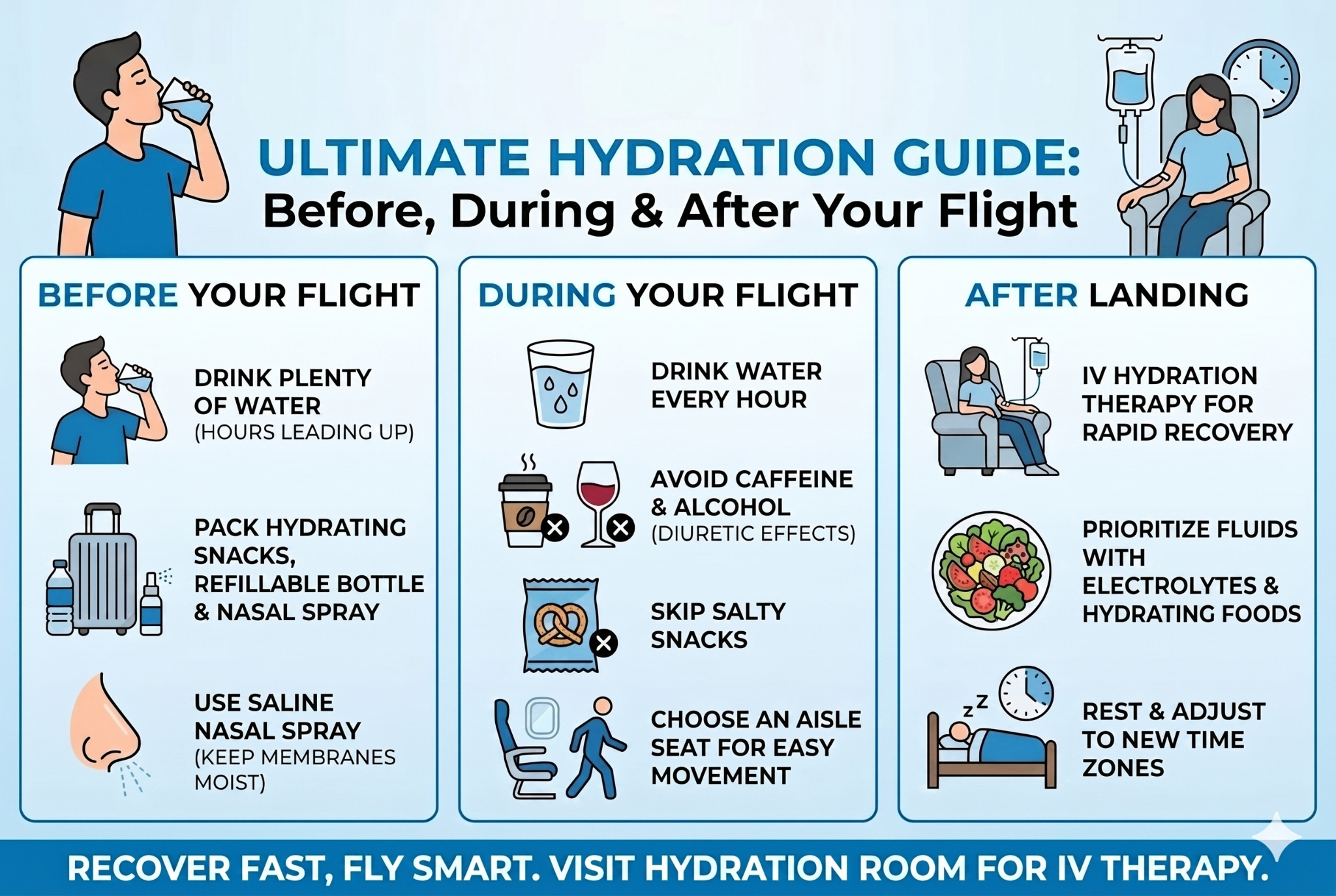 Image Source: Gemini 2026
Key Takeaways:
- Cabin humidity levels of 10% to 20% cause significant moisture loss during flights.
- Changes in air pressure accelerate fluid loss through faster, deeper breathing.
- Mild dehydration can cause fatigue, difficulty concentrating, dry mouth, and dry eyes.
- Alcohol and caffeine have diuretic effects that worsen in-flight dehydration.
- Adding electrolytes to your fluids may improve absorption after flying.
- IV hydration therapy may help support fluid balance. Results may vary.
The Bottom Line
Does flying dehydrate you? Yes, more than most people expect.
Knowing the common signs and having a plan to stay hydrated before, during, and after means you land ready for whatever comes next.
Your healthy place is here, because what’s more important than you? Find your closest Hydration Room location and book a session today.
