
 Image Source: Canva
Winter's shorter days, time spent indoors, and holiday stress can strain your immune system when you need it most. Vitamin C, vitamin D, sleep, and hydration may help support immune function, offering your body supportive habits that can help you navigate the winter season.
You’ve always believed prevention is the best medicine. So have we. You’re not alone if you’ve been feeling a little more run-down as daylight fades and the air gets colder.
When the weather cools, your body may face new demands, and more time indoors, closer social plans, and changing schedules may add extra strain on your immune system, right when you want steady support. The good news is that learning how to boost your immune system may not require a major life reset, especially if you prefer to stay proactive rather than catch up later.
A few consistent, physician-informed habits, paired with the right nutrients, may help your body feel better supported through the winter months.
At Hydration Room, we believe immune support starts with the fundamentals and works best as part of a broader wellness routine rather than a single fix.
Why Winter Puts Extra Pressure on Your Immune System
Winter puts extra pressure on your immune system through a combination of less sunlight, more time indoors, added stress, and disrupted sleep. Shorter daylight hours mean less natural sunlight, which can affect vitamin D levels for many people, especially adults over 50.
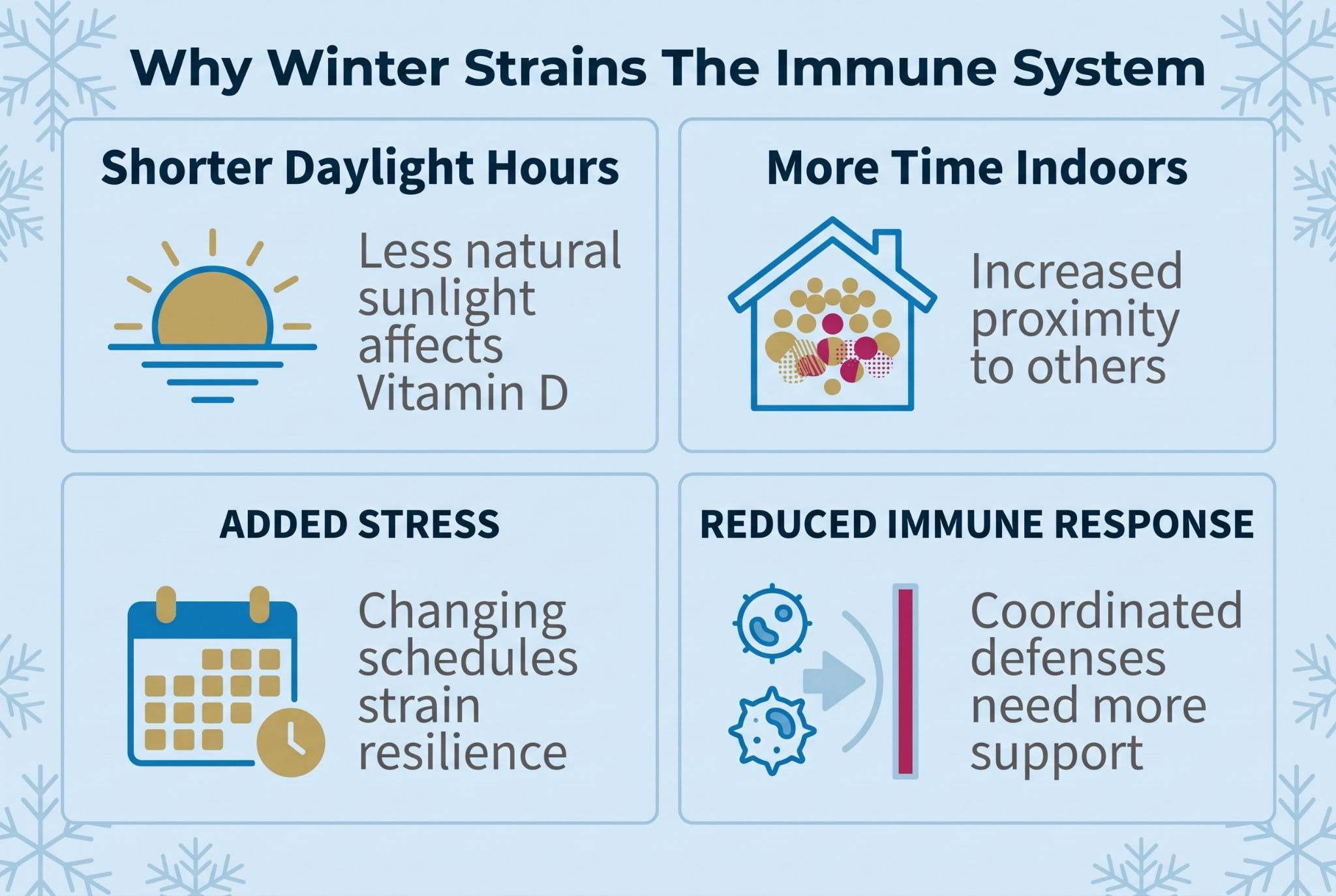 Image Source: Gemini 2026
How to Boost Your Immune System the Right Way in Winter
Supporting a healthy immune system starts with consistency, not quick fixes. These everyday habits, built around the nutrients and routines most closely tied to immune health, are a simple place to start once the cold season starts.
Vitamin C: Make It a Daily Habit
Vitamin C is an antioxidant that may help support immune cell function. Because your body can’t store much of it, a steady daily supply from food matters more than an occasional big dose. A few ways to get more from it:
- Mix up your sources: Citrus fruits, red and green peppers, kiwi, strawberries, broccoli, and Brussels sprouts are all rich in vitamin C.
- Eat some of it raw or lightly cooked: Vitamin C breaks down with heat and long storage, so steaming or microwaving may preserve more of it than boiling.
Vitamin D and Your Immune System
Vitamin D also plays a role in immune function, and levels naturally dip for many people during the winter months. That dip may matter more as you get older, since aging skin doesn’t make vitamin D as efficiently from sunlight. A few ways to stay ahead of it:
- Add vitamin D-rich foods like fatty fish (salmon, trout, tuna), fortified milk and cereals, egg yolks, and UV-exposed mushrooms to your diet.
- Get outside during brighter midday hours when you can, while practicing sun safety.
- Ask your doctor about testing. A conversation about why vitamin D levels may drop in winter and whether testing makes sense is an easy step.
Other Nutrients That May Help Support Immunity
A few other nutrients tend to come up in immune health. Most are easy to get from everyday foods, and a varied diet may help you avoid common nutrient gaps.
|
Nutrient |
Role in Immune Health |
Common Food Sources |
|
Zinc |
Essential for immune cell development and function |
Meat, shellfish, legumes |
|
Vitamin A |
Plays a role in normal immune function |
Sweet potatoes, carrots, leafy greens |
|
Selenium |
May help support the body's natural defenses |
Brazil nuts, seafood, eggs |
Brazil nuts are so rich in selenium that one or two is plenty. Too much selenium can also cause side effects.
Sleep, Stress, and Recovery
Most adults need seven to nine hours of sleep each night, and adequate sleep is closely tied to a healthy immune system. Keeping a consistent bedtime, even on weekends, may make that easier.
Managing stress matters too, since chronic stress can affect how well your body handles everyday demands. Simple habits like walking, breathing exercises, or spending time outdoors may help support your overall resilience.
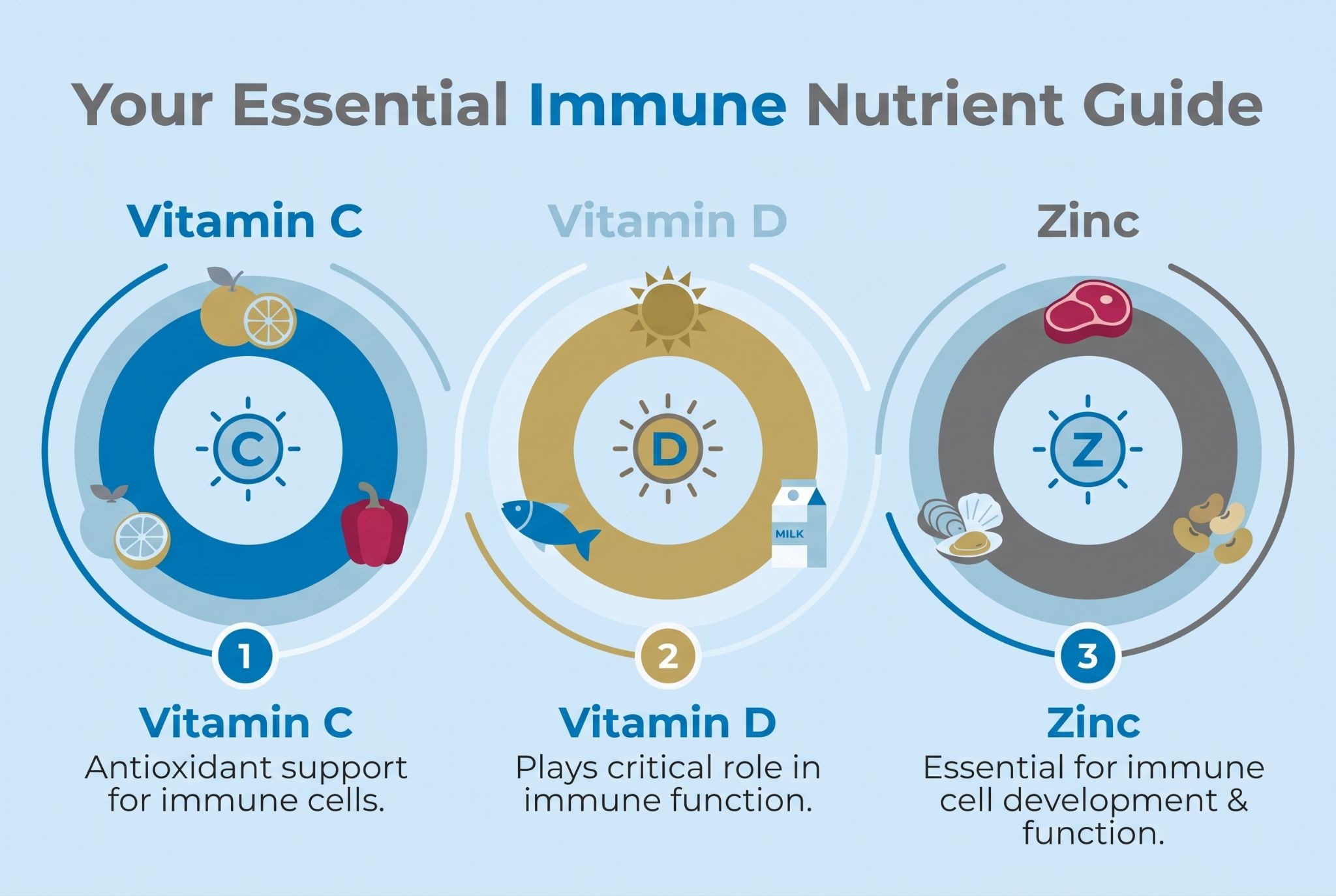 Image Source: Gemini 2026
Healthy Everyday Habits for the Winter Season
No habit can guarantee you won't get sick, but a few simple, CDC-recommended practices may help reduce the spread of germs this season.
- Keep up strong hygiene habits, especially handwashing in public spaces
- Drink enough water throughout the day, since dehydration may place added stress on your body
- Move your body regularly, since exercise may support circulation and overall immune function
- Add fermented options like yogurt, since probiotics may help support a varied gut microbiome, which plays a role in immune function
These habits will not replace medical care, but they may help support your body's natural defenses and help you stay healthy as you move through the season.
FAQs About Immune Support
What’s the best vitamin for a healthy immune system?
There's no single best vitamin for immune health. Vitamin C, vitamin D, and zinc all play a role in immune function, and a varied diet may offer more consistent support than relying on any one nutrient.
What are some healthy ways to boost my immune system quickly when I feel run-down?
There's no quick fix for immune health, but when you're feeling run-down, prioritizing rest, staying hydrated, and eating nutrient-dense meals may help your body feel more supported. Long-term habits still matter most.
Key Takeaways
- Vitamin C, vitamin D, and zinc all play a role in immune function, especially as daylight hours shorten.
- Most adults need seven to nine hours of sleep a night to support a healthy immune response.
- There’s no single answer to how to boost your immune system; consistent sleep, nutrition, hydration, and movement may offer the most meaningful support.
Building a Healthier Winter Routine
Small, consistent choices tend to add up over a season, from the foods on your plate to the hours you sleep.
At Hydration Room, our physician-formulated IV nutritional therapies are designed to complement the habits you’re already building, not replace them. Every service starts with a consultation with a licensed medical provider, and results may vary.
If you’re curious how IV nutritional support may fit into your winter wellness routine, book a consultation at your nearest Hydration Room location. Because what’s more important than you?
