
 Burnout shows up through physical exhaustion, emotional detachment, and behavioral withdrawal, not just tiredness, driven by chronic stress dysregulating cortisol and the nervous system. Recovery combines rest, professional support, and lifestyle changes, with nutritional support providing an additional layer.
You wake up already tired. You get through the day on caffeine and momentum, but by the time you sit down at night, something feels off, and it’s not just exhaustion. If that sounds familiar, you might be dealing with something deeper than a busy season.
Burnout does not happen overnight. It's a gradual process, and recognizing the early warning signs is often the hardest and most important part of burnout recovery. At Hydration Room, we hear this from clients often, so we're breaking down what burnout actually looks like beneath the surface.
Recognizing the Signs of Burnout, Not Just Tiredness
The signs of burnout are easy to dismiss because they can look like ordinary fatigue at first. But burnout symptoms tend to build across three distinct categories: physical, emotional, and behavioral, and they rarely stay in just one.
Physical signs often show up first: physical exhaustion that sleep does not fix, muscle pain, headaches, and a weakened immune system. Some people also notice changes in eating habits or a general sense of physical exhaustion with no clear cause.
Emotional signs include emotional exhaustion, feeling emotionally drained or emotionally numb, growing self-doubt, and a cynicism that was not there before. You may notice yourself losing interest in work or your personal life in an unfamiliar way.
Behavioral and mental signs round out the picture. Procrastination, withdrawal from personal relationships, and reduced performance are classic behavioral signs, while mental exhaustion often shows up as mental cloudiness or difficulty concentrating.
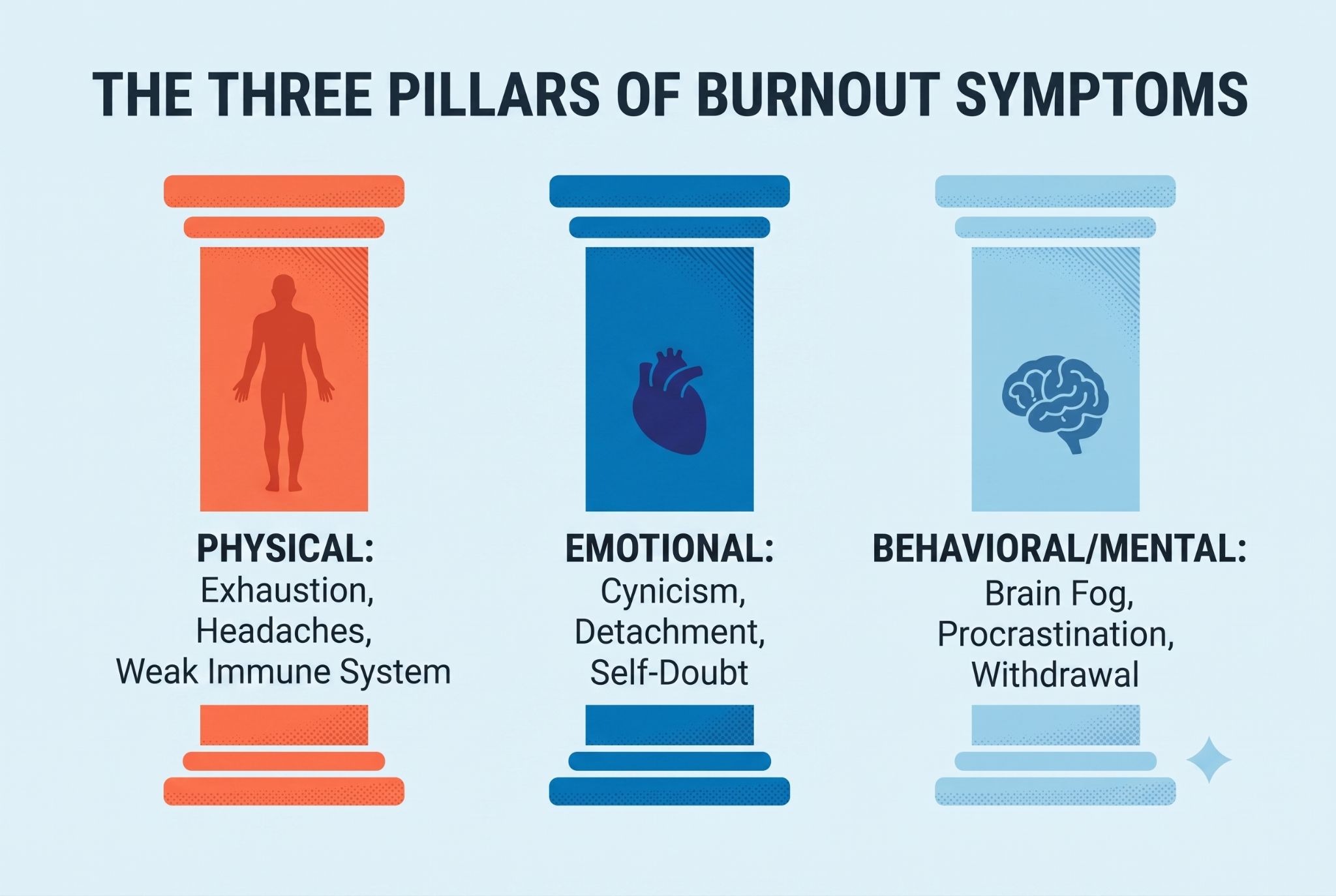 Image Source: Gemini 2026
What’s Happening Underneath: The Stress Response and Cortisol
The World Health Organization (WHO) defines burnout syndrome as an occupational phenomenon resulting from chronic workplace stress that hasn’t been successfully managed. It’s not classified as a medical condition on its own, but the underlying physiology is real.
Prolonged stress keeps the body's stress response activated longer than it’s designed for. Cortisol, which should rise and fall in a healthy daily rhythm, can become dysregulated under long-term stress, disrupting the nervous system's ability to shift between alertness and rest.
Job burnout tends to develop gradually, often progressing through five recognizable stages, a pattern first outlined by researchers Herbert Freudenberger and Gail North:
- Honeymoon phase: You're energized and eager, but starting to take on more than you can really sustain
- Onset of stress: Some days just feel heavier, and small signs of fatigue or worry start creeping in
- Chronic stress: The tired, cynical feeling sticks around longer, and bad days stop bouncing back like they used to
- Burnout: Exhaustion and self-doubt set in, and even routine tasks start to feel like too much
- Habitual burnout: if left unaddressed, this state stops feeling temporary and starts to feel like just how things are
Once you notice where you land on this list, the next useful step isn't to just push through it, but to understand what you're actually dealing with, starting with a distinction that often gets confused: burnout versus depression.
Burnout Vs. Depression: Why the Distinction Matters
Burnout is not the same as depression, and the distinction matters for recovery.
Burnout is typically tied to a specific source, like workplace stress or constant demands, and symptoms often ease when that situation changes.
Depression symptoms, by contrast, tend to persist regardless of circumstances. That said, unmanaged chronic burnout can increase the risk of developing depression over time, which is one reason early intervention and seeking support matter.
The National Institute of Mental Health offers guidance on finding mental health support if these feelings start to feel bigger than everyday stress.
How to Recover From Burnout: A Layered Approach
Recovering from burnout relies on four supportive layers working together: rest and boundaries, professional help, support systems, and nutritional support. No single layer resolves burnout on its own, but combined, they build a sustainable path back to balance.
- Rest and boundaries are foundational. Setting clear boundaries between work and personal life, prioritizing a good night's sleep, and practicing self-care, like deep breathing, can help reduce stress and calm an overactive nervous system.
- Professional help matters too. A doctor or mental health professional can help address the emotional and cognitive load of burnout that rest alone cannot resolve, especially when symptoms feel severe or prolonged.
- Support systems make a measurable difference. Social support from supportive relationships, and involving human resources or a manager where workload is a contributing factor, can help gain perspective on constant pressure at work.
- Nutritional support may also be one piece of the picture. Chronic stress and prolonged demands on the body can affect overall physical health and well-being, and some people choose to support their nutritional foundation as part of a broader plan to prevent recurring burnout. This is only one supportive layer, and results vary from person to person.
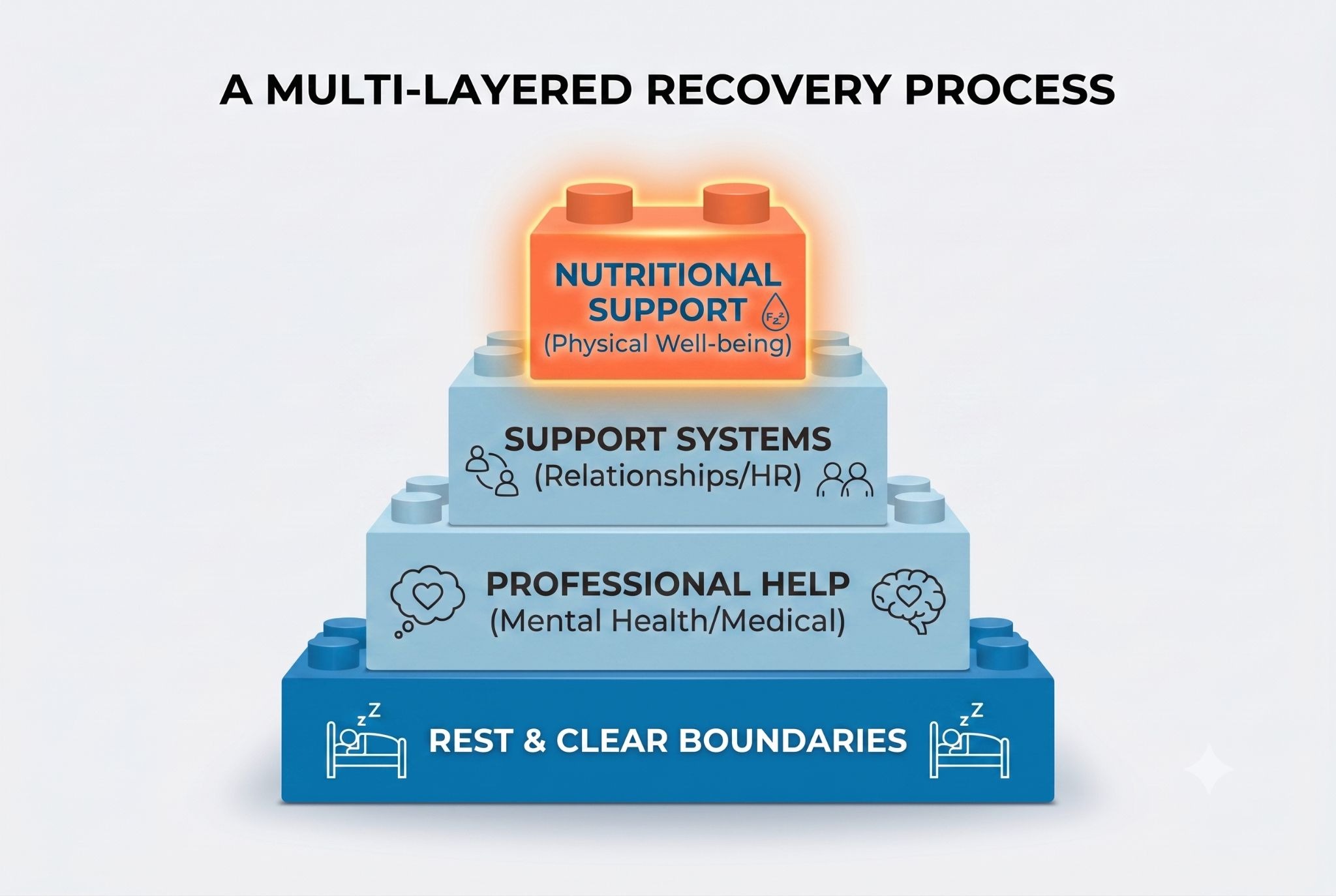 Image Source: Gemini 2026
FAQs About Burnout Symptoms and Recovery
What are the early warning signs of burnout?
Common signs of burnout include physical exhaustion, emotional detachment, cynicism, self-doubt, and reduced performance. These symptoms build gradually and differ from ordinary tiredness or a busy week.
Is burnout recovery possible?
Yes. Burnout recovery is a gradual process that can take weeks to years and typically involves rest, professional support, clear boundaries, and lifestyle changes that work together over time.
How do you recover from severe burnout?
Recovering from severe burnout often requires professional help alongside rest, reduced workload, and stronger support systems. Nutritional support may offer an additional, supportive layer within that broader plan.
What’s the difference between burnout and mental health issues like depression?
Burnout is typically tied to a specific stressor, like work, and often eases when that situation changes. Depression symptoms tend to persist regardless of circumstances or setting.
Key Takeaways
- Signs of burnout go beyond tiredness, spanning physical, emotional, and behavioral symptoms
- Chronic stress dysregulates cortisol, disrupting the nervous system's rest-alertness rhythm
- Burnout is not classified as a medical condition, but unmanaged burnout can raise the risk of depression
- Burnout recovery relies on rest, professional support, and lifestyle changes working together
- Nutritional support may offer one additional, supportive layer, not a stand-alone fix
Recognizing Burnout Is the First Step Toward Recovery
Burnout affects daily life in ways that make routine tasks feel monumental, and neglecting self-care along the way only deepens it. Recognizing the signs of burnout early, whether physical, emotional, or behavioral, gives you the chance to prevent burnout from progressing further.
Recovery takes time, prioritizing rest, seeking professional help when needed, and building a healthier relationship with stress and personal life. Nutritional support may play a helpful role alongside that work, but it’s never a stand-alone answer.
